Pokazywanie postów oznaczonych etykietą Battleground Pzg. Pokaż wszystkie posty

18 stycznia 2017

Desert War, 1942. Wojna na pustyni, 1942.

Welcome in new, 2017 year! It took me some time to publish first post in this year, but things at work get little complicated and instead of gaming I had to solve some things. Now everything is as it should be, so back to hobby. Since my last post I had pleasure having 2 games. The first was played in first Thursday in the club and it was game involved 10 players and 2 tables. The idea was to get familiar with Deluxe version of Battleground Panzergrenadier. It was ages ago, when I had the last game with that rules and it was great opportunity, to get them refreshed. For those who asking what are the differences between those two sets, I would said, that not big. At least I did not find any particular. However you need to remember that I did not played those rules for a long time and could be completely wrong...
Witam w nowym, 2017 roku! Zajęło mi to trochę czasu, be w końcu opublikować pierwszego posta w tym roku, ale kilka rzeczy skomplikowało mi się w pracy i zamiast sobie grać, musiałem tam wszystko sobie poukładać. Teraz wszystko wróciło już do normy, więc można wrócić do hobby. Od czasu opublikowania mojego ostatniego postu, udało mi się rozegrać dwie gry. Pierwsza z nich została rozegrana w pierwszy czwartek tego roku i wzięło w niej udział 10 graczy na dwóch stołach. Pomysłem na ta grę było wydanie wersji deluxe zasad Battleground Panzergrenadier. Minęły już wieki, od kąd miałem styczność z tymi zasadami i była to doskonała okazja, by je sobie odświeżyć. Dla tych co będą pytać o różnice, pomiędzy tymi dwoma wersjami, to mogę jedynie powiedzieć, że nie są one zbyt duże, przynajmniej ja takich nie zauważyłem. Jednak należy przy tym pamiętać, że mój ostatni kontakt z nimi był wieki temu i mogę się tu bardzo mylić...

SCENARIO/SCENARIUSZ: Sandy Gillespie
UMPIRING/PROWADZENIE GRY: Sandy Gillespie
SCENERY/SCENERIA: SESWC, Scotty
MODELS/MODELE: Angus Konstam, Sandy Gillespie and others

1. Forces. Siły.


BRITISH/BRYTYJCZYCY
(Neil, Angus Konstam, Jack Glanville, Bartek Żynda)

HQ
4 x Infantry Company
4 x 2pdr guns
Matilda II tanks sqdr. (3 tanks)
A10 tanks sqdr. (3 tanks)
4 x Cruiser tanks sqdr. (3 tanks each)

2 x airstrikes
3 x indirect artillery 
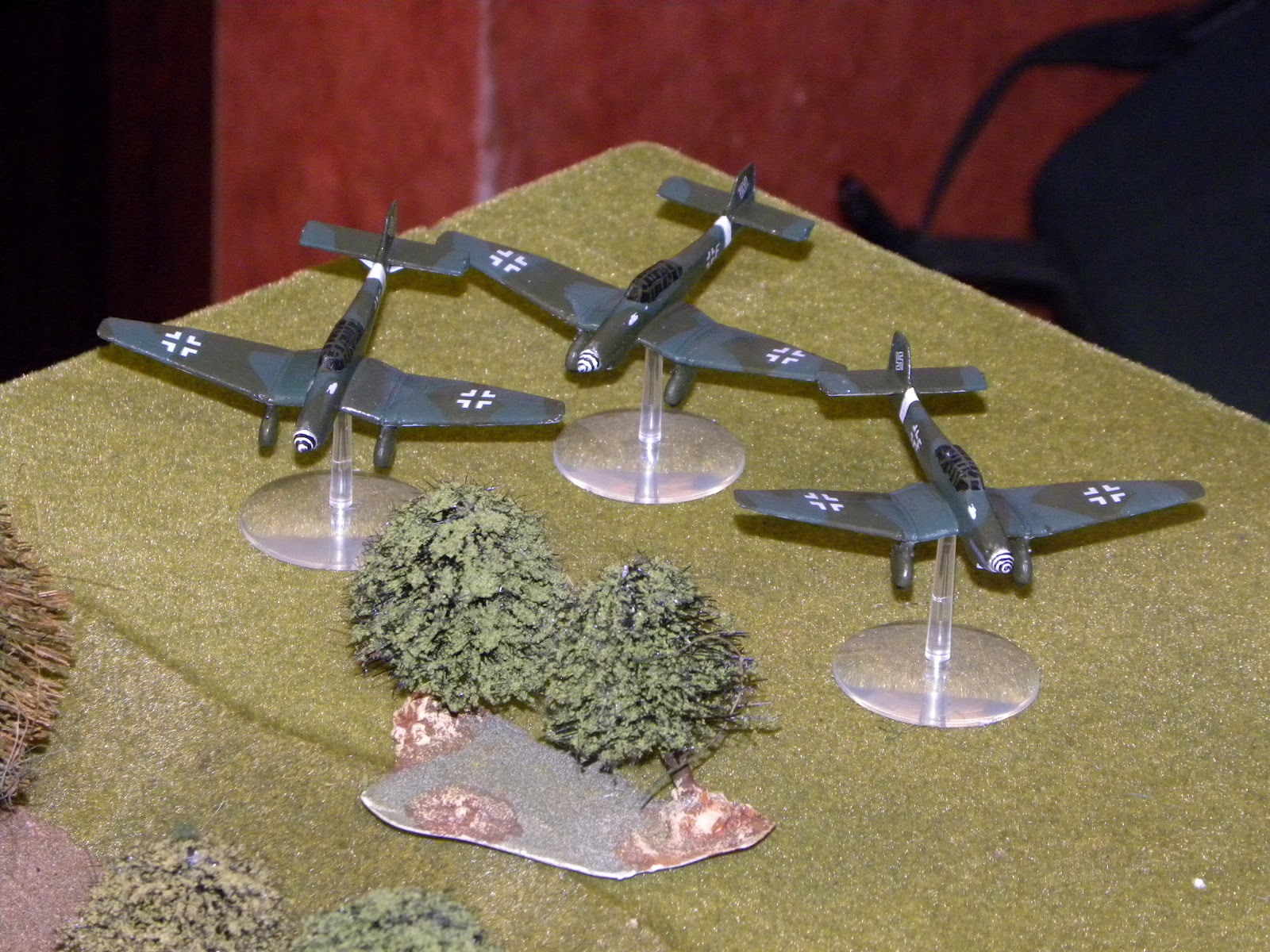
GERMANS/NIEMCY
(Jim, Derek Hodge, Campbell Hardie)

HQ
2 x Infantry Company in Trucks
1st Tank Battalion (HQ: Pz I; 2 x (3 x Pz II) Sqdr.; 1 (3 x Pz III) Sqdr.)
2nd Tank Battalion (HQ: Pz I; 2 x (3 x Pz II) Sqdr.; 1 (3 x Pz IV) Sqdr.)

2 x airstrikes
3 x indirect artillery
ITALIANS/WŁOSI

HQ
3 x Infantry Company
1 x M11/39 tank sqdr. (3 tanks)
2 x M13/40 tank sqdr. (3 tanks each)
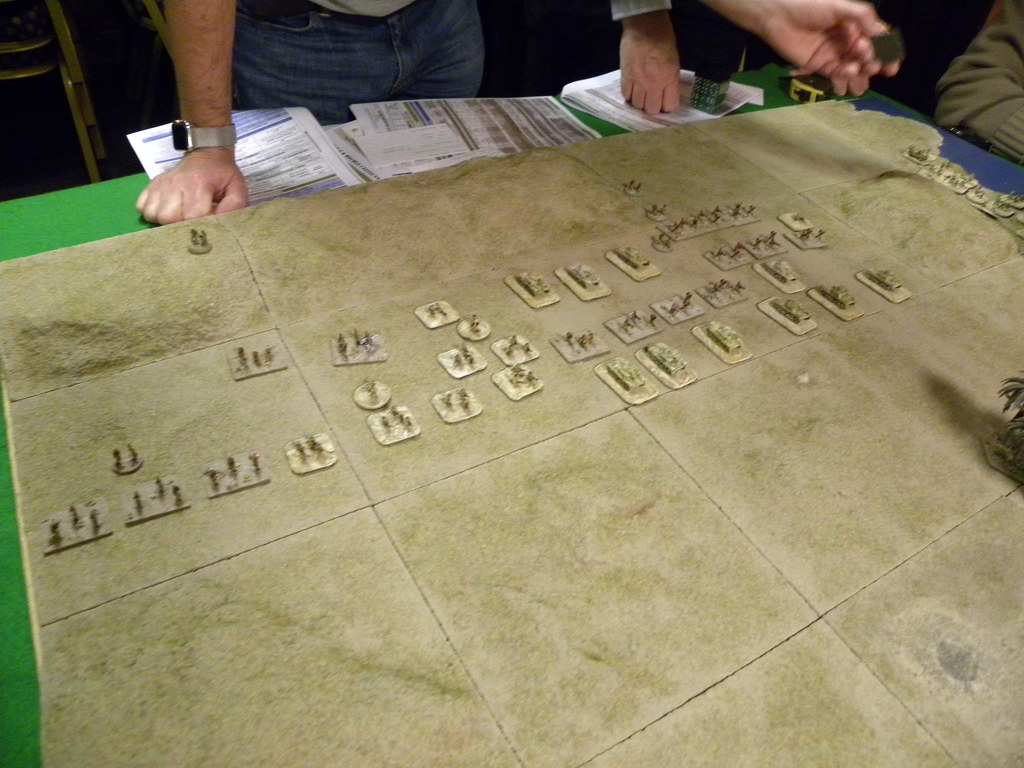
2. The game. Gra.


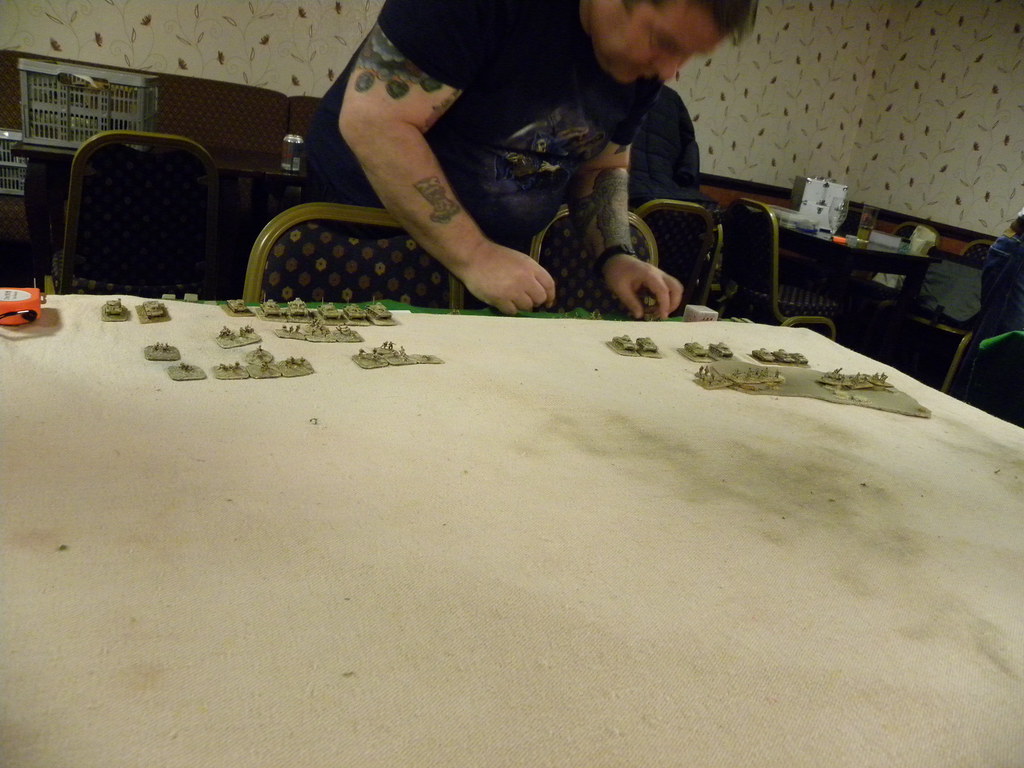
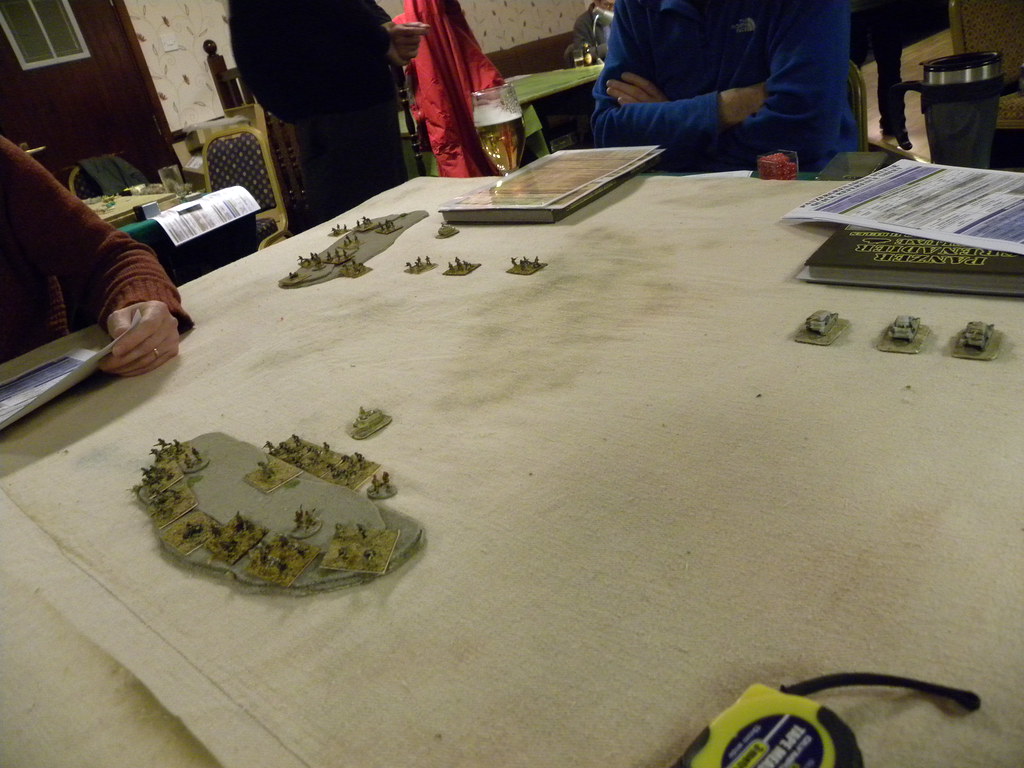
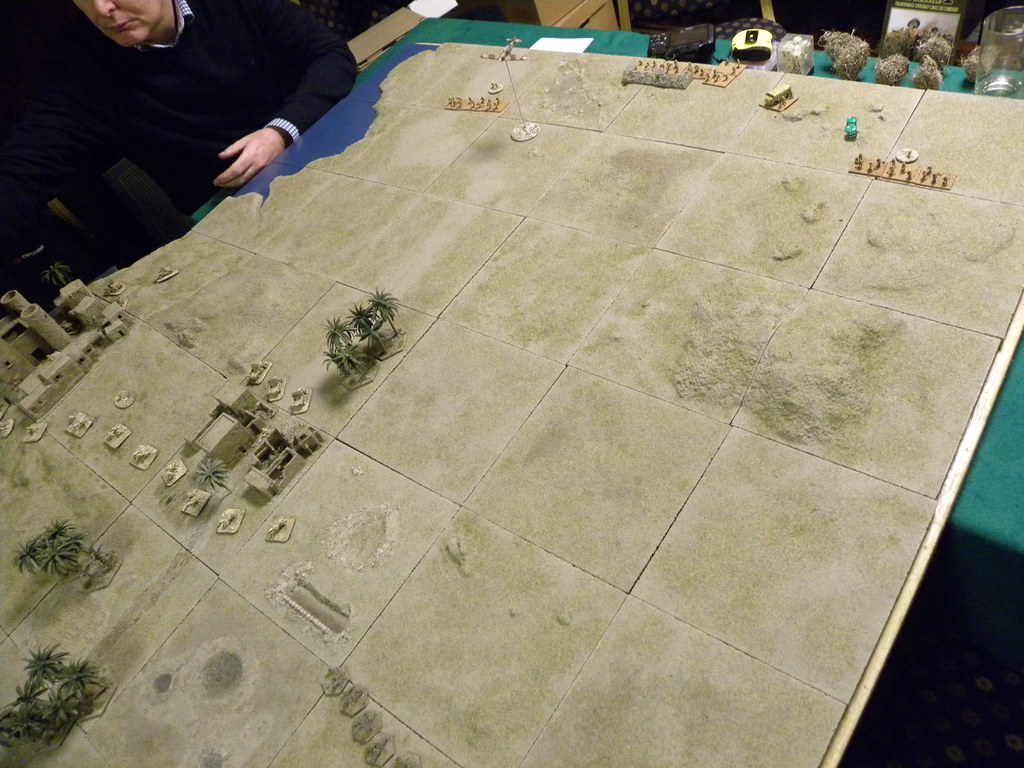
Before the game, Sandy made a pregame selection. Everyone of us had to draw a card with his forces. I got the British Infantry Company. As I said before the game was played on two tables. One of them, the coastal was made by Scotty and looks absolutely amazing. You can check it on some pictures below.  On that table we send Angus and Jack, who had to fight against Italians. Me and Neil (CinC) had to face Germans on desert table. Both sides had some support of Air Forces and Artillery, which could be send to the one of the tables at any point of the game. British on both tables started game in prepared positions.
Przed grą Sandy przeprowadził losowanie. Każdy z nas musiał wylosować kartę z podległymi mu jednostkami. Mi przypadła brytyjska kompania piechoty. Tak jak to powiedziałem we wstępie, gra była podzielona na dwa stoły. Jeden z nich to dzieło Scotta i przedstawia wybrzeże z zamkiem, całość wygląda niesamowicie. Możecie sami go obejrzeć na poniższych zdjęciach. Na tamten stół wysłaliśmy Angusa i Jack'a, którzy musieli walczyć przeciw Włochom. Ja i Neil (nasz głównodowodzący) mieliśmy za zadanie powstrzymać Niemców na pustynnym stole. Obie strony miały wsparcie lotnicze i artylerii, które mogli wezwać w dowolnej dla nich chwili. Na obu stołach Brytyjczycy zaczęli grę w przygotowanych pozycjach obronnych.
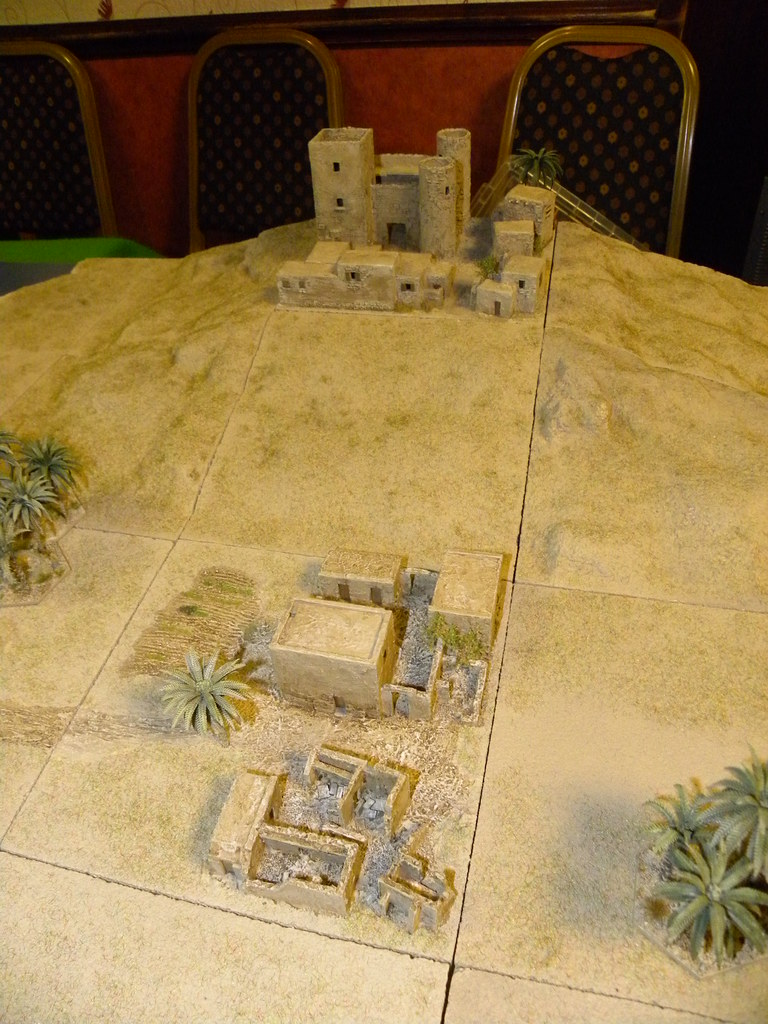
On the coastal table the British had some hard moments against Italians, who this time were tough opponent. Finally both sides took half of the table and finished with a draw. More detailed relation from that table, you can find on Angus's blog:
Na nadmorskim stole Brytyjczycy mieli ciężkie chwile z Włochami, którzy okazali się bardzo twardym przeciwnikiem. Ostatecznie obie strony zajęły po połowie stołu i gra zakończyła się remisem. Bardziej szczegółowy opis starcia znajdziecie na blogu Angusa:
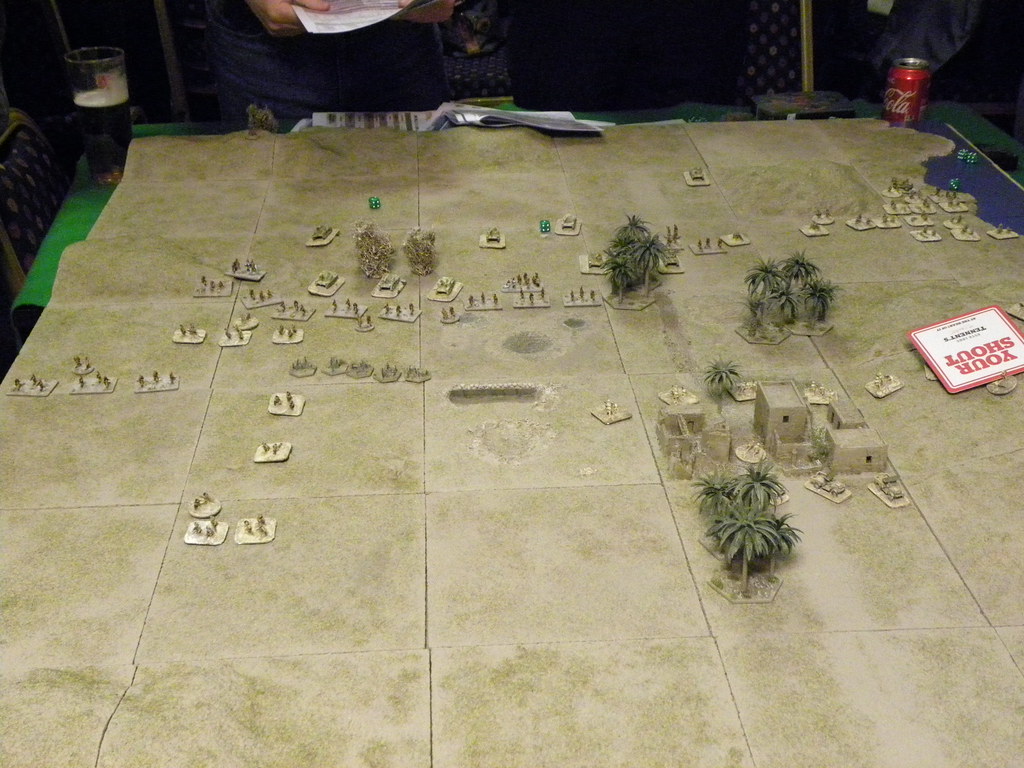
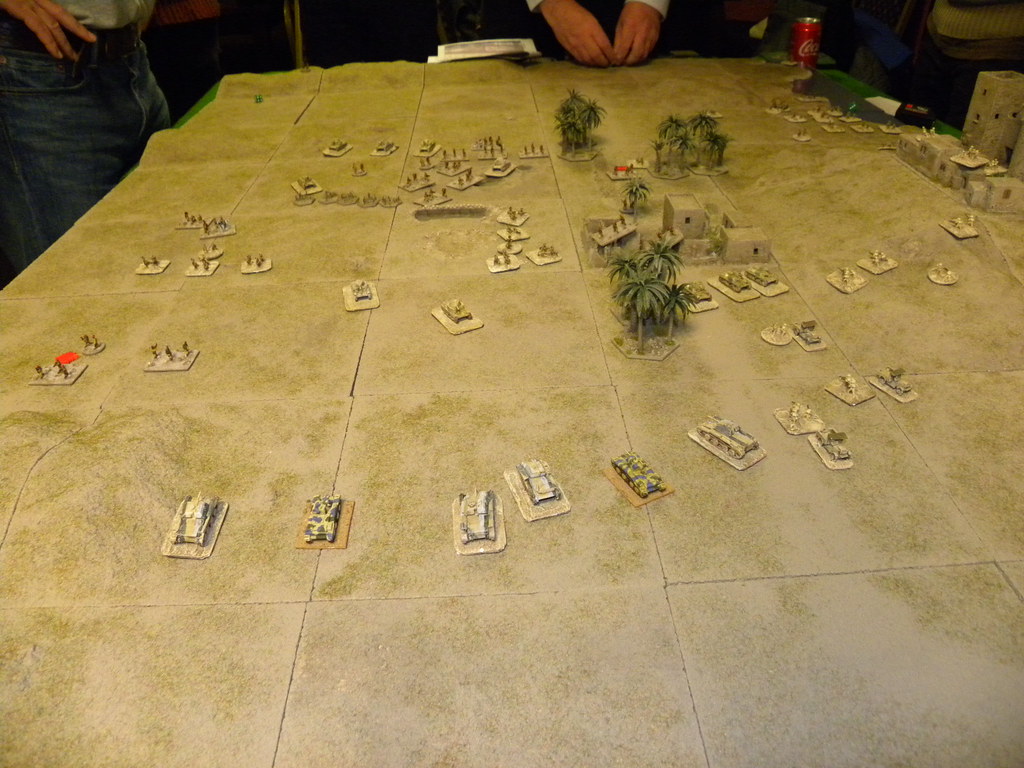
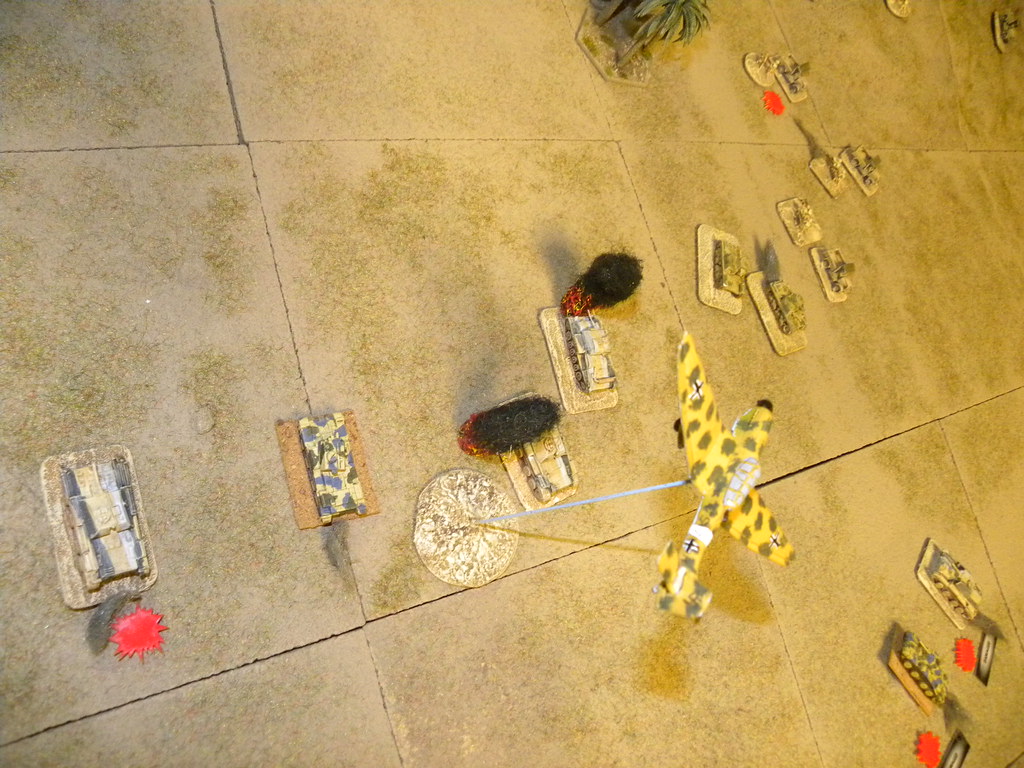
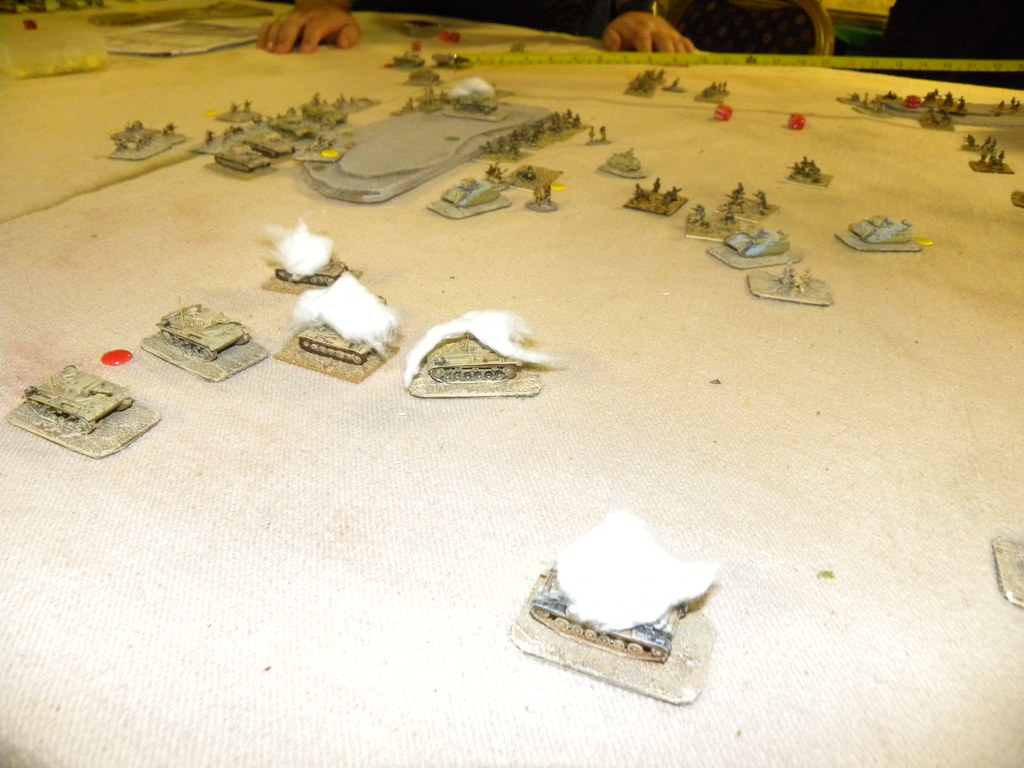
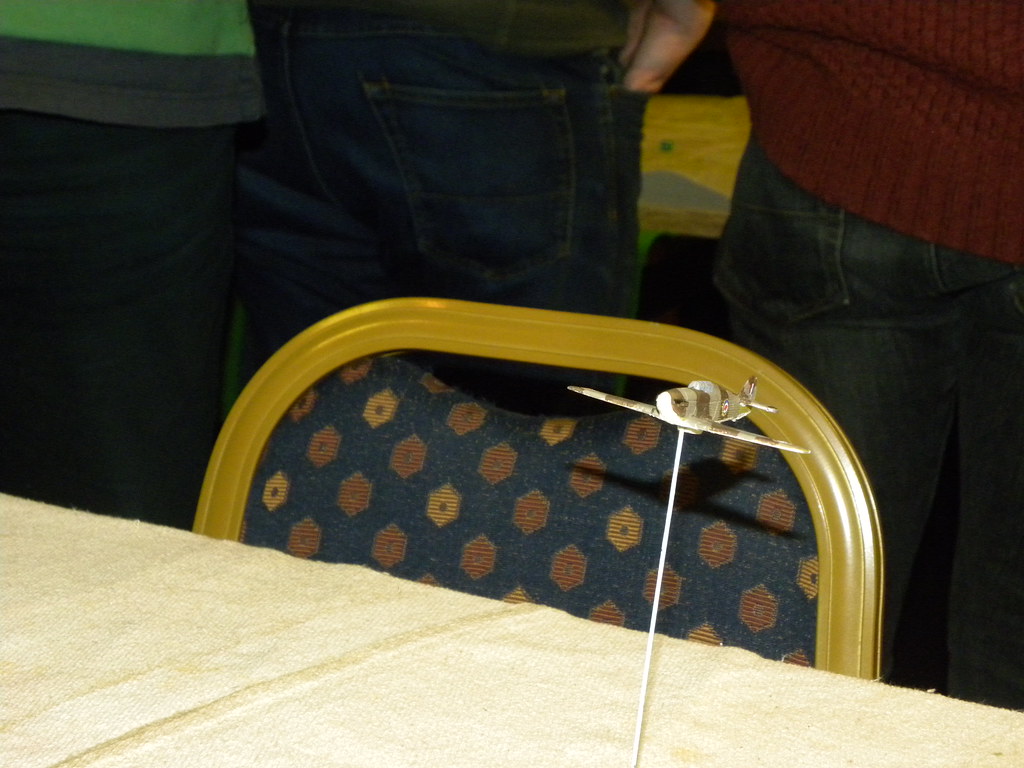
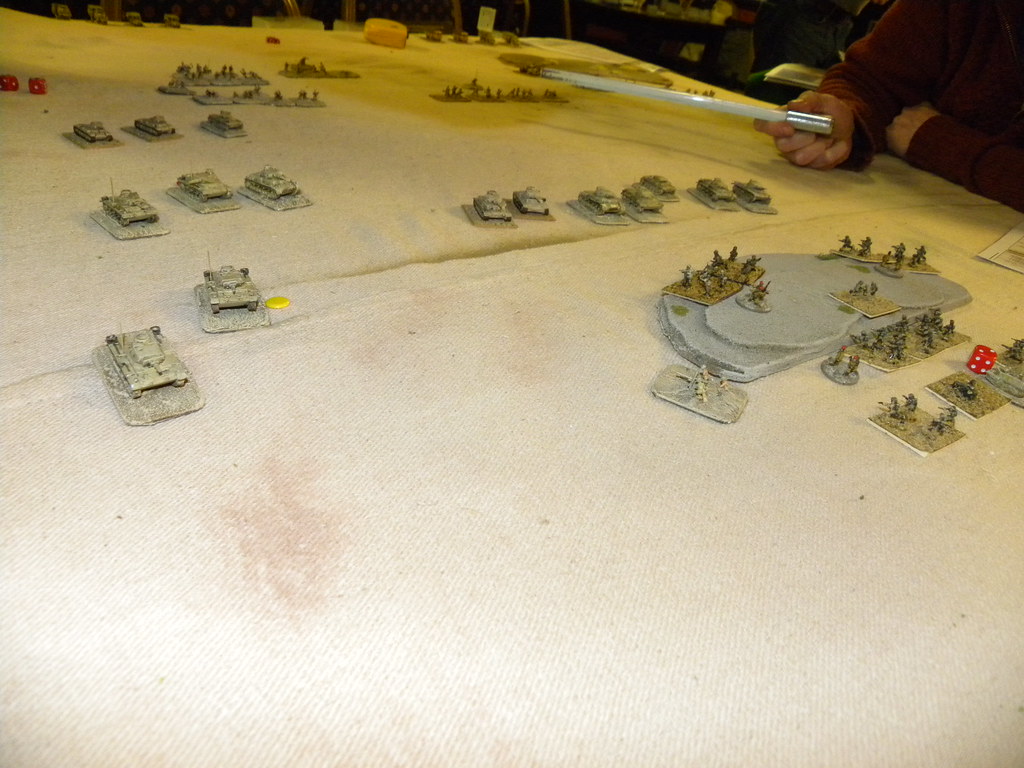
On our table the situation was much more difficult. I started game on the forward position with the task of defending the hill. Germans strike with a fury and very quickly forced my forces to hide behind the hill. Then their tanks get surprised first by our 2pdrs and then by our Matilda tanks. We got support of RAF and soon the field was full of wrecks of German tanks. However despite our efforts, some of the German tanks managed to break through our defences. However the gap wasn't big and the British forces managed to survive till the end of the game.  That game also finished with a draw as the whole game. Good game for a good start of the year!
Na naszym stole sytuacja była zdecydowanie trudniejsza. Grę zacząłem na wysuniętej pozycji na wzgórzu, którego miałem bronić.  Niemcy uderzyli z furią i wkrótce moje oddziały musiały skryć się za wzgórzem. Wtedy ich czołgi zostały zaskoczone, wpierw przez nasze dwufuntówki  a później przez nasze Matyldy. Udało nam się też uzyskać wsparcie RAFu i wkrótce nasze pole walki usiane było wrakami niemieckich czołgów. Jednak pomimo naszych wysiłków część niemieckich czołgów przedarła się przez nasza obronę, jednak wyrwa nie była zbyt duża i Brytyjczykom udało się dotrwać do końca gry. Na tym stole również doszło więc do remisu i cała gra zakończyłą się takim wynikiem. To była dobra gra na dobry początek roku!

3. Some other links. Kilka innych linków.


SESWC(Campbell):

Flickr:

12 maja 2013

24 Pułk Ułanów - Czołg Dowodzenia. 24th Uhlans Regiment - Command tank.

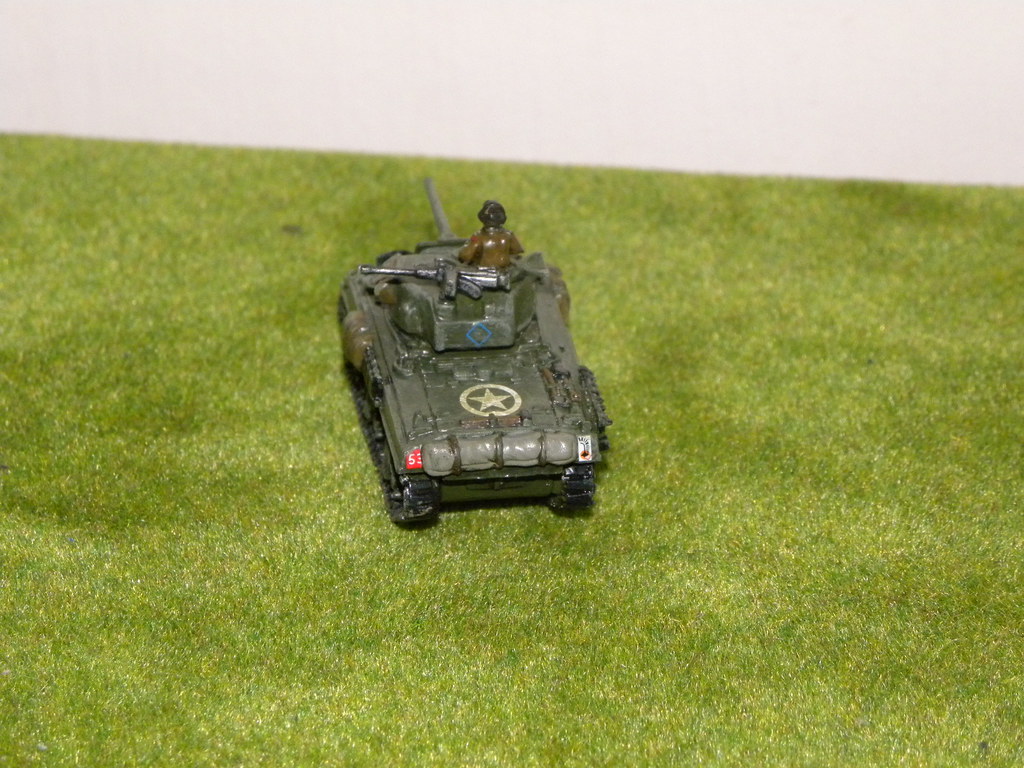
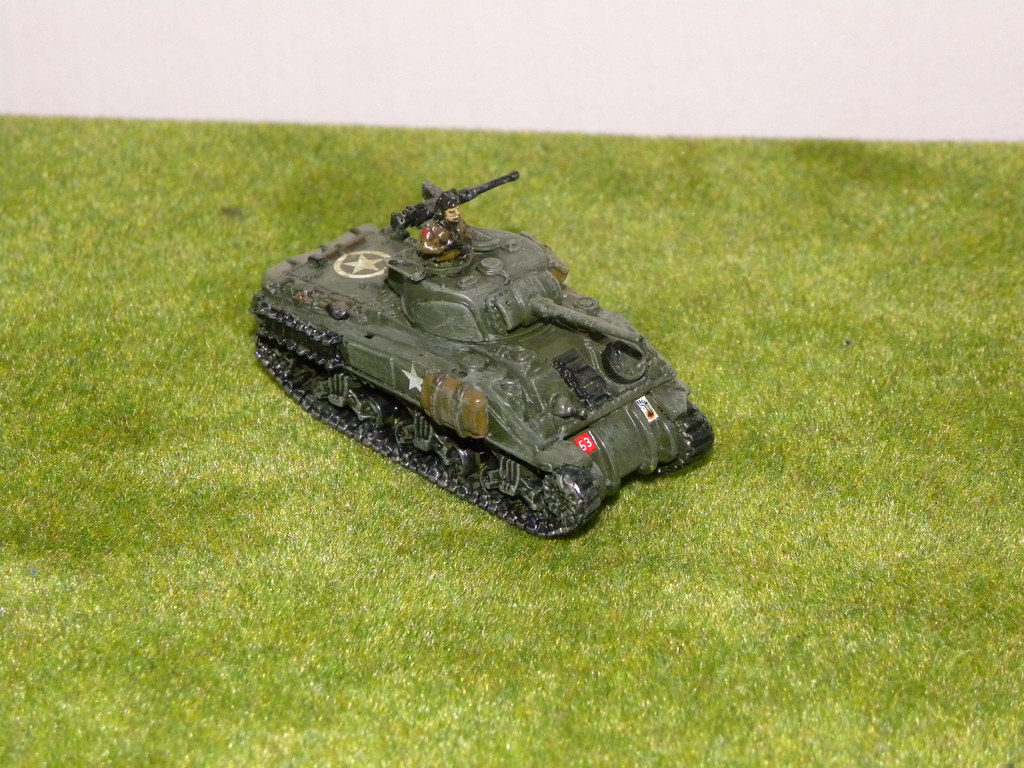
Dzisiaj kolejny model, tym razem dla mojej 1. Dywizji Pancernej. Jest to czołg dowodzenia dla mojego 24 Pułku Ułanów. Z czołgu oczywiście spogląda dowódca pułku, podpułkownik Jan Witold Kański. Model pochodzi od firmy Battlefront. Historia pozyskania tego modelu  jest dość ciekawa, ponieważ wygrałem go w pojedynku wg. zasad Flames Of War, przeciwko jednemu z przedstawicieli wydawcy tej gry na tegorocznym Salute. Był to pojedynek 3 Shermany na 2 StuGi. Ja straciłem jednen czołg, natomiast mój przeciwnik stracił oba StuGi. Chciałbym zaznaczyć, że nigdy wcześniej nie grałem w tą grę. W ten właśnie sposób, Sherman dołączył do mojej kolekcji.
Today, another model, this time for my 1st Polish Armoured Division. It is a command tank for my 24 Uhlan Regiment. From the tank you can see the commander of the regiment, Lieutenant Colonel Jan Witold Kański. Model comes from the Battlefront. History of obtaining this model is quite interesting, because I won it in a duel with Flames of War rules, against one of the representatives of the publisher of the game at this year Salute. It was a duel beetween three Shermans and two StuGs. I lost one tank, while my opponent has lost both StuGs. I would like to point out that I've never played this rules before. This is how, the Sherman joined my collection.


W tym momencie wypadało by wspomnieć o dowódcach 24 Pułku Ułanów. Oto pełna ich lista:
At this point, Its good to mention about the commanders of 24th Uhlan Regiment. Here is the complete list of them:
  • Płk Tadeusz Żółkiewski (1920)
  • Mjr Jan Kanty Olszewski (1921)
  • Ppłk Rudolf Lang (1921 – 1929)
  • Ppłk Kazimierz Halicki (1929 – 1932)
  • Płk dypl. Kazimierz Dworak (1932 – 1940)
  • Ppłk Jerzy Deskur (1940 – 1942)
  • Ppłk Bogumił Szumski (1942 – 1943)
  • Ppłk Jan Kański (1943 – 1944) - zmarł od ran odniesionych w walce; died of wounds suffered in combat
  • Ppłk Romuald Dowbor (1944 – 1947)
  • Mjr dypl. Tadeusz Wysocki (1947)
Mjr - Major; Mjr dypl. - Major who finished the War Academy; Ppłk - Lieutenant colonel; Płk - Colonel.

28 listopada 2012

24 Pułk Ułanów - gotowy. 24th Uhlans Regiment - done.

Oto gotowy 24 Pułk Ułanów. W najbliższym czasie będę musiał zakupić dodatkowy zestaw kalkomanii od PSC, ponieważ jeden nie wystarczył na pokrycie wszystkich czołgów... Wciąż muszę dorobić HQ pułku (2x Sherman M4), oraz zdecydowałem się dodać pluton łącznikowy (3x Scout Humber) i wtedy pułk będzie ostatecznie gotowy.
Here is a 24th Uhlan Regiment done. In the near future I will have to buy an extra set of decals from the PSC, because one was not enough to cover all the tanks... I still need to make some extra tanks for regimental HQ (2x M4 Sherman), and I have decided to add a linker platoon (3x Humber Scout) and then the regiment will be finally finished.
Więcej zdjęć:/More pictures:

Obecnie pułk przechodzi intensywne szkolenie, czyli przypominam sobie zasady Battleground PzG i już wkrótce pułk powinien wziąć udział w swojej pierwszej bitwie...
A tymczasem zapraszam do przeczytania pierwszej części mini historii pułku:
Currently the regiment receives intensive training, which means that I re-read the Battleground PZG rules and soon the regiment should take part in its first battle...
In the meantime, I invite you to read the first part of the mini-history of the regiment:

24 Pułk Ułanów im. Hetmana Wielkiego Koronnego Stanisława Żółkiewskiego powstał w czerwcu 1920 roku jako 214 Pułk Ułanów Armii Ochotniczej podczas wojny polsko-bolszewickiej, rozkazem Głównego Inspektoratu Armii Ochotniczej. Pułk był formowany początkowo we Lwowie i Stanisławowie, a następnie w Lesznie k. Warszawy. Pierwsze walki pułk stoczył przeciwko 1. Armii Konnej Semiona Budionnego w rejonie Miączyn – Grabowiec. Po zaciętych walkach w rejonie Zamościa, pułk w składzie 18 Dywizji Piechoty utrzymując zarazem kontakt z Dywizją Konną generała Rómmla wziął udział w pościgu za cofającym się nieprzyjacielem po bitwie warszawskiej. Akcja pod Turzyskiem, za którą Pułk był cytowany w komunikacie Naczelnego Wodza oraz bitwa pod Stepaniem o przeprawy na rzece Horyń, były jednymi z ważniejszych dokonań Pułku. Około 10 października Pułk, w składzie 3. Bryg. Jazdy, przeszedł na pogranicze Litwy w rej. Ejszyszki - Bieniakonie. Stoczywszy dwie kolejne bitwy Pułk zajął Rudniki i Olkienniki. W końcu grudnia Pułk przeszedł na stały postój do Żółkwi, gdzie został przemianowany na 24. Pułk Ułanów armii regularnej.
Sztandar pułku (strona lewa i prawa). Regimantal banner (left and right side). source: http://www.24pu.org
W czasie pokoju pułk stacjonował kolejno w Żółkwi, Dębicy, Staszowie i Jarosławiu a następnie do Kraśnika, wyznaczonego na stałe miejsce postoju. W tym czasie pułk wszedł w skład 17 Brygady Kawalerii. W roku 1922 Pułk otrzymał z rąk Marszałka Józefa Piłsudskiego sztandar, ufundowany przez byłych ochotników 214 Pułku Ułanów Armii Ochotniczej. Święto pułkowe ustalono na dzień 21 września jako rocznicę bitwy pod Stepaniem, zmienione później na dzień 6 lipca - rocznicę dnia formalnego zatwierdzenia Pułku. W roku 1927 zatwierdzony został znak pułkowy. W początkach 1937 r. rozkaz Ministra Spraw Wojskowych nakazał zmotoryzowanie Pułku i wejście w skład 10 Brygady Kawalerii (od 1940 10 Brygady Kawalerii Pancernej) wraz z 10 Pułkiem Strzelców Konnych, w składzie której pozostał już do końca, wpierw w Polsce, potem we Francji i w Wielkiej Brytanii a następnie na polach bitew Francji, Belgii, Holandii i Niemiec.
W roku 1938 Pułk brał czynny udział w zajęciu Zaolzia i Jaworzyny (Javorina). 8 października 1938 roku pułk zajął Bogumin (Bohumín) , zabezpieczając tym przeprawy na Olzie. W listopadzie tego roku pułk brał udział w potyczce z wojskiem czechosłowackim pod Żdżarem (Ždiar). Po zajęciu Zaolzia, Pułk powrócił do Kraśnika.
W połowie marca 1939 r. Pułk został zaalarmowany, przeszedł do rejonu Boguchwała pod Rzeszowem, gdzie pozostał w pogotowiu bojowym do połowy sierpnia. Wybuch wojny zastał Pułk na koncentracji w rejonie Skawina.
W czasie Kampanii Wrześniowej Pułk był w akcji od pierwszych jej dni i stoczył cztery bitwy: obronę w rejonie Wysokiej (2.09.1939), natarcie pod Kasiną Wielką (4.09.1939), walki opóźniające w rejonie Rzeszowa i Łańcuta (8-9.09.1939) i natarcie w rejonie Hołosko – Grzybowice – Zboiska pod Lwowem (15-17.09.1939). 19 kwietnia na rozkaz Szefa Sztabu Głównego Pułk przekroczył granicę polsko-węgierską na Przełączy Tatarskiej i został tam internowany.
Ponowne odtwarzanie pułku nastąpiło we Francji, początkowo w obozie Coetquidan, a następnie w Paimpont, potem Bollene i w końcu w Mondragon. 29.05.1940 Pułk został przesunięty w rejon Arpajon pod Paryżem. 2. szwadron wziął udział w walkach osłonowych francuskiego 7. Korpusu. Po walkach pod Montbart i opóźnianiu na Dijon grupa otoczona przez nieprzyjaciela nie mając benzyny i amunicji, będąc pod ciągłym bombardowaniem lotniczym, na rozkaz D-cy Bryg. zniszczyła sprzęt i małymi oddziałami przedzierała się na południe. Wiele z nich przez Hiszpanię lub Afrykę północną i Gibraltar dołączyło do oddziałów w Wielkiej Brytanii. W tym czasie pozostała część pułku przybyła w rejon St. Varren, gdzie otrzymała rozkaz przejść na południe i starać się ewakuować do Wielkiej Brytanii z portu Le Verdon. 21.06.1940 Pułk z całą bronią i amunicją, pozostawiając tylko sprzęt motorowy załadował się na ostatni okręt opuszczający brzegi zachodniej Francji — „Royal Scotsman" i odpłynął do Wielkiej Brytanii.
25.06.1940 HMS „Royal Scotsman” mający na pokładzie 24 Pułk Ułanów wpłynął do West Docks portu Liverpool. Pułk został przerzucony do Szkocji gdzie stacjonował w Glasgow a następnie w rejonie Douglas i Biggar. Od 26.07.1940 roku ochrania lotnisko w Johnstone, a od 18.10.1940 uczestniczy w ochronie wybrzeża szkockiego przed inwazjom niemiecką. Od września 1941 Pułk szkoli się na sprzęcie czołgowym i przeorganizowuje się na pułk pancerny. 11.04.1941 pułk przechodzi do Calashiels i Lauder. 6.06.1943 na poligonie w rejonie Chippenham odbywa po raz pierwszy próby jako pułk pancerny. Po tym pułk ponownie powraca do Szkocji. Od końca września Pułk zaczął otrzymywać czołgi typu Sherman i Stuart. Od 19.03.1944 Pułk rozpoczął mobilizację, do 18.04.1944 wymieniono cały sprzęt szkoleniowy na bojowy. 23.05.1944Pułk przeszedł do Bridlington w celu ostatecznego przygotowania się do akcji. Pogotowie i przejście w dniu 16.07.1944 do rejonu wyczekiwania Aldershot zakończyło długi okres przygotowania Pułku do wzięcia udziału w ostatecznej rozgrywce z Niemcami. 29.07.1944 Pułk załadowano na statki w Londynie i 30.07.1944 opuścił ujście Tamizy kierując się ku brzegom Francji, na pole bitwy w Normandii.
Cdn...
The 24th Uhlan Regiment of the Great Crown Hetman Stanisław Żółkiewski was established in June 1920 by order of the Chief Inspectorate of the Volunteer Army as the 214th Uhlan Regiment of the Volunteer Army during the Polish-Bolshevik war. The regiment was formed initially in Lvov and Stanislav, and then in Leszno near Warsaw. The first battle the regiment fought against the 1st Cavalry Army of Semion Budyonny in the area Miaczyn - Grabowiec. After heavy fighting in the area of ​​Zamosc, a regiment as the part of 18th Infantry Division also maintained contact with the Cavalry Division of General Rómmel took part in the pursuit of the retreating enemy, after Battle of Warsaw. Action at Turzysk, for which regiment was quoted in the release of Supreme Commander and Battle of Stepanie over the crossing of the river Horyn, were among the most important achievements of the regiment. Around 10th October, regiment as the part of the 3rd Cavalry Brigade took the posiotions on the Polish-Lithuania border in the area of Ejszyszki – Bieniakonie. Fought two more battles, regiment took Rudniki and Olkienniki. At the end of December regiment has been sent to Zhovkva, where was renamed for the 24th Cavalry Regiment of the regular army.
 
In midwars times, the regiment was stationed first in Zhovkva, then in Debica, Jaroslaw, Staszow and then in Kraśnik, appointed on a permanent basis based. At that time the regiment became the part of the 17th Cavalry Brigade. In 1922 the regiment received their banner from Marshal Jozef Pilsudski, donated by the former volunteers of the 214th Uhlan Regiment of the Volunteer Army. Regimental day was set for 21th September as the anniversary of the Battle of Stepanie, changed later on 6th July - the anniversary of the formal approval of the regiment. In 1927, was approved regimental sign. At the beginning of 1937, by the order of the Minister of Defence, regiment has been motorized and took part together with 10th Polish Mounted Rifle Regiment in the 10th Cavalry Brigade (from 1940 10th Armoured Cavalry Brigade), remained as the part of it until the end of the war, first in Poland then in France then in Britain and then on battlefields of France, Belgium, Holland and Germany.
In 1938, the regiment took part in the annextion of Zaolzie and Javorina. 08.11.1938 the regiment took Bohumin, protecting the crossing on Olza river. In November this year, the regiment took part in a skirmish with the Czechoslovak army at Zdiar. After annextion of Zaolzie, regiment returned to Krasnik.
In the middle of March of 1939, the regiment was alerted, and moved to the area of Boguchwala near Rzeszow, where remained in a combat ready until middle of the August. The outbreak of of the war found regiment in the region of Skawina.
During the Polish Campaign the regiment was in action from the first dayof wa and fought four battles: the defense of the region of Wysokie (02.09.1939), assault in the Kasina Wielka (04.09.1939), delay fighting in the region fo Rzeszw and Lancut (8-9.09.1939 ) and assault in the area Holosko - Grzybowice - Zboiska near Lvov (15-17.09.1939). 19th April by the orders of the Chief of the General Staff the regiment crossed the Polish-Hungarian on Tatar Pass and was interned there.
Replay of the regiment took place in France, initially in the camp Coetquidan, then Paimpont, then Bollene and finally in Mondragon. 29.05.1940 the regiment was moved to the area of Arpajon near Paris. Second squadron took part in the battles of shielding the French 7th Corps. After the battles of Montbart and delaying fightings at Dijon, group surrounded by the enemy, with no petrol and ammunition, being under constant bombardment by air, destroyed their equipment and with small groups struggled south. Many of them by Spain and North Africa and Gibraltar joined the troops in the UK. At this time the remainder of the regiment arrived in the region of St. Varren where was ordered to move south and try to escape to the UK from the port of Le Verdon. 21.06.1940 the regiment with all the weapons and ammunition, leaving only the motor equipment, loaded on the last ship leaving the western shores of France - the HMS Royal Scotsman and sailed to the UK.
25.06.1940 HMS Royal Scotsman having on board 24 Uhlan Regiment reached the West Docks in Liverpool. The regiment was moved to Scotland, where was stationed in Glasgow and then in the area of ​​Douglas and Biggar. From 26.07.1940 was protecting the airfield in Johnstone and from 18.10.1940 participates in the protection of the East Coast of Scotland against German invasion. From September 1941 the regiment was trained with tank equipment and reorganizes to the armored regiment. 04.11.1941 regiment goes to Calashiels and Lauder. 06.06.1943 on the proving ground in the area of ​​Chippenham held the first test as an armored regiment. After that regiment again returned to Scotland. From the end of September the regiment began to receive Sherman and Stuart tanks. From 19.03.1944 the regiment began mobilizing and till 18.04.1944 replaced all training equipment for combat one. 23.05.1944 24th moved to Bridlington to prepare for final action.
On 16.07.1944 moved to the waiting area in Aldershot ended a long period of preparation of the regiment to take part in a subjugation of Germany. 29.07.1944 the regiment was loaded on ships in London and left Thames Estuary on 30.07.1944 heading for the shores of France, on the battlefield of Normandy.
To be continued ...

 
Bibliografia:/Sources:

  1. Historia 24 Pułku Ułanów na stronie Koła Koleżeńskiego 24 Pułku Ułanów autorstwa Andrzeja Ruska:http://www.24pu.org/index.php?option=com_content&task=view&id=42&Itemid=32
  2. Janusz Ledwoch: „1 Dywizja Pancerna 1939-1944”, Wydawnictwo Militaria,Warszawa 1996.
  3. Kacper Śledziński: „Czarna Kawaleria. Bojowy szlak pancernych Maczka”, Wydawnictwo Znak, Kraków 2011.
  4. Zbigniew Lalak: „Broń Pancerna w PSZ 1939 – 1945. Organizacja i struktura.”, Pegaz-Bis &O.K. Media, Warszawa 2005.

20 listopada 2012

24 Pułk Ułanów; 24th Uhlans Regiment - WIP

Prace nad 24 Pułkiem Ułanów trwają. Czołgi otrzymały już bazowe kolory. Reszta prac w ten weekend i jak wszystko pójdzie zgodnie z planem trzon pułku będzie gotowy do prezentacji w niedzielę wieczorem.
Works on 24th Uhlans Regiment are in progress. Tanks have already received basic colors. The rest of the work this weekend and if all goes according to the plan, the core of the regiment will be ready for presentation on Sunday evening.

Obecny stan pułku:
The current look of the regiment:

28 października 2012

24 Pułk Ułanów - WIP; 24th Ulans Regiment - WIP.

Prace nad 24 Pułkiem w toku. Na załączonym zdjęciu czołgi są pokryte czarnym kolorem bazowym. Dzisiaj sprayowałem je na zielono, jutro mam nadzieje pobawię się szczegółami i być może zacznę zabawę z kalkami.
Work on 24th Regiment in progres. On attached picture the tanks are covered with black primer paint. Today I  sprayed them with green and tommorow I am going to paint some details and maybe  I will start game with the decals.


27 października 2012

24 Pułk Ułanów - zmontowany. 24th Ulans Regiment - assembled.

Dzisiaj skończyłem montować 24 Pułk Ułanów. Na dzień dzisiejszy widzicie trzy szwadrony i pluton rozpoznawczy. Wszystkie Shermany są produkcji The Plastic Soldier Company, natomiast Stuarty pochodzą od Forged in Battle. Zdecydowałem się na razie nie bazować Shermanów, zawsze to mogę zrobić później. Jutro idzie kolor bazowy. Teraz nie wiem, czy wpierw kłaść czarny i później ciemno zielony, czy od razu zieleń. Jakieś sugestie w tej materii?
Today I finished assemling of the 24th Ulans Regiment. For this day you can see three squadrons and rece platoon. All Shermans are from The Plastic Soldier Company, whilst Stuarts are from Forged in Battle. I decided to not based the Shermans, I can always do it later. Tomorow I will put the base color, and I'm not sure to put first black and then dark green or straight green. Any sugestions?

08 sierpnia 2012

24 Pułk Ułanów. 24th Polish Ulans Regiment.

Dzisiaj mija dokładnie 68 lat, kiedy oddziały 1 Dywizji Pancernej ruszyły do boju, podczas bitwy o Falaise. Aby to uczcić postanowiłem ruszyć z moim projektem i w ten sposób został zmontowany 1 Szwadron 24 Pułku Ułanów. O samym pułku napiszę w momencie, kiedy będzie już gotowy do prezentacji w całości. A na razie zdjęcie zmontowanych czołgów. Na fotografii zapodział się również czołg Stuart z Plutonu Rozpoznawczego.
Today is exactly 68 years, from that day, when units of Polish 1th Armoured Division get in fight, during the Battle of Falaise. To celebrate this, I decided to start my project, and I assembled the 1st Squadron of 24th Ulans Regiment. About the regiment I will write, whet it will be ready for presentation. In the meantime, photos of tanks assembled. On the picture you can also see the Stuart tank from the Reconnaissance Platoon.
Shermans - PSC 15mm; Stuart - Forged in Battle 15mm


14 lipca 2012

Pierwsza Dywizja Pancerna. 1st Polish Armoured Division


W tym miejscu postanowiłem rozpocząć mój nowy projekt, zbudowanie całości 1 Dywizji Pancernej generała S. Maczka. Dywizja będzie odtwarzana w oparciu o system Battleground Panzergrenadier w skali 15mm. W pierwszej kolejności będą to: 1 i 2 pułk pancerny oraz 24 pułk ułanów. Te trzy pułki miały identyczną strukturę, tzn: dowództwo, pluton rozpoznawczy i po trzy szwadrony czołgów. Po przeliczeniu na wyżej wymieniony system każdorazowo pułk będzie wyglądał następująco:

  • Dowództwo: 2x M4A4 Sherman
  • Pluton rozpoznawczy: 4x Stuart (użyję wersji M3 zamiast używanych w rzeczywistości M5), chyba że PSC w końcu wyda ten czołg.
  • 3xSzwadron: 4xM4A4 Sherman + 1xSherman Firefly.
Głównie będę bazował na modelach dwóch firm: Plastic Soldier Company i Forged in Battle. Nie ukrywam, że cena ma tutaj duże znaczenie. Następne posty już wkrótce. Bardzo dziękuję Jimowi za pomoc w przeliczaniu wszystkich oddziałów dywizji na system Battleground PzG. No i do roboty :)
Generał Stanisław Maczek - dowódca dywizji od 25 lutego 1942 do 20 maja 1945. General Stanislaw Maczek commander of the division from 25th February 1942 till 20th May 1945. Źródło/Source: wikipedia
At this point I decided to start my new project, building a whole Polish 1st Armored Division under command of General S. Maczek. Division will be based on the ruleset Battleground Panzergrenadier in 15mm. I will start with: 1st and 2nd Armoured Regiments and 24 Lancers Regiment. These three regiments had identical structure: HQ, reconnaissance platoon, and three squadrons of tanks. After converting into the above-mentioned system, each regiment will be looks as follows: 
  • HQ: 2x M4A4 Sherman
  • Rec. Platoon: 4x Stuart (I'll use M3 instead M5 which was used by division in original), unles PSC finally will do this tank.
  • 3xSquadron: 4xM4A4 Sherman + 1xSherman Firefly. 
I am going to use primarily models of two companies: Plastic Soldier Company and Forged in Battle. I must admit that the price is very important here. Next posts soon. Many thanks to Jim for his help in convertering the original OdB into Battleground PzG scale. So now, nothing more than start painting the tanks.
Kalki od PSC. Na stronie producenta nie ma zdjęcia. Decals from PSC. On their website there is no picture of them.
Po więcej informacji o dywizji zapraszam na strony wikipedii:
For more informations go on wikipedia sites:

05 maja 2012

News from the front. Wiesci z frontu.

To już 6 miesięcy, odkąd zacząłem pisać ten blog. Dziękuję wszystkim odwiedzającym mój blog. To wielki zaszczyt mieć świadomość, że kogoś interesuje to, co staram się opisywać. Korzystając z tej okazji, chciałbym przygotować krótkie podsumowanie oraz nakreślić kilka planów na przyszłość.
It's been 6 months since I started writing this blog. Thanks to all visitors to my blog, is a great honor to know that someone is interested in what I'm trying to describeI would like to make a short summary and outline some plans for the near future.

SESWC, wargaming, Salute, Claymore.

Od września ubiegłego roku jestem członkiem Południowo-Wschodniego Szkockiego Klubu Wargaminowego w Edynburgu i dzięki temu mogę bardzo aktywnie rozwijać swoje hobby. Dzięki kontaktom tam nabytym moja dotychczasowa wiedza na ten temat znacząco wzrosła. Wielkie dzięki, Panowie! A mogąc uczestniczyć w cotygodniowych spotkaniach, regularnie gram w gry i bardzo miło spędzam czas. 
Inną aktywnością dotyczącą mojego hobby, obecną na blogu, są konwenty wargamingowe. Wielka Brytania jest krajem, w którym praktycznie w każdym miesiącu odbywa się jakieś show. Jaką to wygląda miałem sie okazję przyjrzeć na dwóch show, w których jako widz miałem możliwość wzięcia udziału, były to Claymore 2011 w Edynburgu i Salute 2012 w Londynie. Pierwszy z nich to największy show organizowany w Szkocji, a drugi to mega wydarzenie nie tylko na skalę Zjednoczonego Królestwa, ale także europejską i światową (jedno z największych i najważniejszych takich spotkań). Generalnie nie różnią się one od siebie zbytnio, jedynie rozmiarem. W obu przypadkach odwiedzający mają możliwość zapoznania się z klubami wargamingowymi, które prezentują dokonania swoich członków, często również swoje autorskie pomysły dotyczące zasad rozgrywek itp., albo pozwalają nowym hobbystom dołączyć do klubów — tak zrobiłem ja. Służą także integracji środowiska. To tam w naszym własnym gronie mamy możliwość wymiany naszych doświadczeń, a przede wszystkim spędzenia bardzo miłego czasu na tym, co lubimy najbardziej. Drugą korzyścią z takich spotkań jest możliwość zapoznania się z ofertami producentów i handlowców. Nasze hobby ma to do siebie, że większość produktów kupujemy nie w sklepach, ale przez internet. Często strony te nie oferują zdjęć produktów lub zdjęcia są niewystarczające. Tam, na takich spotkaniach, mamy możliwość przyjrzenia się im i ustalenia własnej opinii na temat danego produktu. Ja na pewno będę takie show odwiedzać, może nieregularnie, ale od czasu do czasu na pewno.

Since September last year, I have been a member of the South East Scotland Wargaming Club, and I am very actively pursuing my hobby. Thanks to the contacts I acquired there, my previous knowledge of the subject has greatly increased. Many thanks, Gentlemen! And by attending the weekly meetings regularly, I played the game, and it was very nice to spend time. And thanks to the weekly meetings, I can regularly play games and have a very nice time with my hobby.
Another activity currently on my blog is wargaming shows. Great Britain is a country where practically every month there is a show.  What does it look like I had the opportunity to look at two shows, in which I had the opportunity to participate, they were the Claymore 2011 in Edinburgh and Salute 2012 in London. The first is the largest show held in Scotland, and the second is a mega event, not only for the United Kingdom but also for Europe and the World  (one of the largest and most important shows)Generally, there are no differences between those shows, besides the sizeIn both, visitors have the opportunity to meet wargaming clubs, which present the achievements of their members. Very often, they present new ideas of the games, etc. The shows allow new hobbyists to join the clubs - I liked this. They also support environmental integrationIt is the place where we, the wargamers, can exchange our experiences and spend a nice time on what we like the most. The second benefit of such meetings is to get the opportunity to meet with representatives of producers and traders. In our hobby, most of the products we do not buy in high street stores, but through the internet.
In many cases, these sites do not offer product images, or the pictures are inadequate. There, at such meetings, we can look at them and determine our own opinion about the product. I will definitely visit such shows, maybe not regularly but from time to time for sure.

Plany. Plans

To są moje plany dotyczące co chcę zrobić w najbliższym czasie (ustawione wg priorytetu):
  1. Dalej będę kontynuował mój projekt "Polska 1944" w skali 20 mm. Niemcy są już w 90% gotowi i wkrótce możecie spodziewać się artykułu o nich. Sovieci dzięki Salute też dostaną trochę nowego sprzętu. Na pewno w dalszej przyszłości Armia Krajowa i być może Armia Berlinga.
  2. W 15 mm dla II. Wojny światowej rozpoczynam projekt wykonania całości Dywizji Pancernej generała Maczka. Armia będzie przygotowywana zgodnie z zasadami Battleground PzG.
  3. W 28 mm oddział Normanów na 6 pkt. do Sagi i być może również Jomswikingów.
  4. Jakaś armia do  Ogniem i Mieczem.
  5. Polacy 1920 w 28mm
  6. Mohawkowie (XVIII wiek) w 28mm
  7. Armia Księstwa Warszawskiego do Black Powder w 28mm
Mam tez grupę zasad, jakie mi się spodobały i są to:
  1. Saga
  2. Ogniem i Mieczem - jestem w trakcie czytania zasad, jednak zostały mi one bardzo rzeczowo przedstawione przez jednego z konsultantów historycznych gry Michała Paradowskiego znanego bardziej jako Kadrinazi (link do jego bloga)
  3. Battleground PzG dla 2WŚ w 15mm
  4. Rapid Fire! dla 2WŚ w 20mm
  5. Triumph and Tragedy i Back and Beyond dla gier z okresu I wojny światowej i międzywojnia.
  6. Black Powder dla gier z XVIII i XIX wieku.

Plany są więc duże i mam nadzieję, że uda mi się wykonać wszystkie z nich. Nie stawiam sobie również granicy czasowej — te armie prędzej czy później skompletuję.

These are my plans for what I want to do in the near future (arranged in order of priority):

  1. I will continue my Poland 1944 project in 20mm. Germans are now 90% ready, and soon you can expect an article about it. Soviets, because of Salute, also get some new equipment. In the more distant future, Polish Home Army and perhaps Berling's Army.
  2. For the 15mm, I'm going to start a new project and create the whole 1st Polish Armoured Division of General Maczek. The Army will be prepared for  Battleground PZG rules.
  3. Normans in 28mm for Saga and perhaps Jomsvikings.
  4. Some army for a new set of rules from Poland called By Fire and Sword.
  5. Poles 1920 in 28mm
  6. Mohawks (18th century) in 28mm 
  7. Army of the Duchy of Warsaw to the Black Powder in 28mm
 I also have a group of rules, which I liked, and they are:
  1. Saga
  2. With Fire and Sword - I tried to read the rules, but they were very objectively supplied to me by one of the historical consultants of the game, Michał Paradowski, better known as Kadrinazi (link to his blog) - those rules allow you to fight the battles in the 17th-century Polish-Lithuanian Commonwealth.
  3. Battleground PZG for WW2 in 15mm 
  4. Rapid Fire! for WW2 in 20mm 
  5. Triumph and Tragedy and Back and Beyond for  WW1 and the interwar period. 
  6. Black Powder for the 18th and 19th centuries.
The plans are very big, and I will get them all done. I do not put off time - these armies will sooner or later be completed.

03 maja 2012

Road to Dunkirk 1940; Droga do Dunkierki 1940 (SESWC)

This time, becouse of  local elections our weekly meeting was held in tuesday instead of thursday. We decided to play Battleground PzG in 10mm. Scenario (by Jim) was about German advantage to Dunkirk in 1940 and Allied try to stop them. Derek and me played Germans, Paul and Jack Allied.

Battlefield from German side. Pole bitwy od strony niemieckiej.

Germans crossed on battlefield in two groups. Group under Derek command has been stopped by British gun (under Paul command), and he had to use his infantry to clear the road. However before the gun has been 'silenced', Paul managed to destroy german tank and heavy damaged german armoured carhat behind the gun their position had two british platoons. It's turned out, that behind the gun there ware two another British platoons, so there ensued a fierce fight. On the other side my troops started advantage into small village. After few spotings (I did not spotted anything), my troops cross beetween buildings... My plan was to help Derek to unblock the road, but shame on me I get directly into ambush prepared by Paul... Result: I lost whole infantry platoon... My second infantry platoon hid behind the hegrows, and made an assault on british in the village, but has stopped in the centre of the field and has been massacred by deadly british fire. After this disaster (on my demand...) my PzKpfw IVs arrived and began to shoot at the buildings. The effects ware quickly. One of the teams could not stand fire, and fled from the village. And at this stage we have to finish our game. Paul show us, this time, how to prepare very good defend, so for example coused that Jack take no part in the game. I think that during the next turs, Germans will be trying to flatted British positions with their tanks and artillery, and later on with their aircraft.
The next game will be feudal Japan in 28mm.
Tym razem ze względu na odbywające się w czwartek wybory nasze cotygodniowe spotkanie w klubie odbyło się we wtorek. Zdecydowaliśmy się na rozegranie gry przy użyciu Battlefield PzG w skali 10mm. Scenriusz stworzony przez Jima opowiadał o niemieckim natarciu w kierunku Dunkierki i alianckich próbach jego powstrzymania. Derek i ja zagraliśmy Niemcami a Paul i Jack Aliantami.
Niemcy wkroczyli na pole bitwy w dwóch grupach. Grupa Derek'a została zatrzymana przez brytyjskie działo (pod dowództwem Paula) i musiał użyć swojej piechoty aby odblokować drogę. Jednakże zanim brytyjskie działo zostało "uciszone" zdołało zniszczyć niemiecki czołg i ciężko uszkodzić samochód pancerny. Za działem okazało się że maja swoje pozycje dwa plutony brytyjskiej piechoty, wywiązała się więc tam zażarta walka. Po drugiej stronie moja grupa rozpoczęła marsz w kierunku małej wioski. Po kilku rekonesansach (nic nie zauważyłem), moje oddziały wkroczyły pomiędzy zabudowania. Mój plan polegał na wsparciu Derek'a by odblokować drogę, ale wstyd to przyznać wpadłem prosto w zasadzkę przygotowana przez Paula... Rezultat: straciłem cały pluton piechoty... Mój drugi pluton piechoty skrył się za krzakami a następnie wykonał szturm na budynki zajmowane przez Brytyjczyków, jednakże w połowie pola w terenie otwartym został zmasakrowany przez zabójczy ogień brytyjski. Po tej katastrofie (w sumie na moje własne życzenie.. i zaczęły ostrzał tych budynków. Efekt był natychmiastowy. Jeden z zespołów nie wytrzymał ognia i uciekł z wioski. W tym momencie musieliśmy zakończyć grę. Paul, tym razem pokazał nam jak przygotować skuteczną obronę, co spowodowało że Jack tylko biernie przyglądał się grze. Myślę, że w ciągu następnych tur Niemcy skoncentrowali by się na ostrzale brytyjskich pozycji i wyeliminowania ich w ten sposób. Do użycia mieli czołgi, artylerię i także lotnictwo.
Następna gra to feudalna Japonia w skali 28mm.

Kampfgruppe Derek enter the road. Kapmfgruppe Derek'a pojawia się na drodze.

German Ju 87 ready for action, but not this time... Niemieckie Ju 87 gotowe do akcji, ale nie tym razem...


Kampfgruppe Bart.

Burning German tank. Płonący niemiecki czołg.

Next time use the recon option her Offizer - effect of the ambush on my KG. Następnym razem wykorzystaj lepiej rozpoznanie, her Offizer - efekt zasadzki na moje KG.

German infantry behind the hedges. They should stayed there... Niemiecka piechota za krzakami. Powinni tam zostać...


British infantry team eskaping from the village after the fire of my PzKpfw IVs. On the left Derek trying to make his way. Brytyjska drużyna piechoty ucieka z wioski po ostrzale moich PzKpfw IV. Po lewej Derek próbuje utorować sobie drogę.
My PzKpfw IVs. Moje PzKpfw IV.

As usual for more pictures from the game see my flickr/Jak zawsze po więcej zdjęć, zajrzyj na mojego flickr'a:


16 marca 2012

Belgium 1940; Belgia 1940

As announced in my last post our last SESWC game was hypothetical battle somewhere in Belgium in May 1940. We use again Battlegroung PzG rules, but with 10mm models this time. Scenario and impiring the game  Jim did again.
Tak jak to podałem w ostatnim moim poście, nasza ostatnia gra w SESWC to hipotetyczna bitwa, rozegrana gdzieś w Belgii w maju 1940 roku. Znowu użyliśmy zasad Battleground PzG, ale tym razem z modelami w skali 10mm. Jim znowu opracował scenariusz i następnie prowadził grę.
Battlefield; Germans right, Allied left. Pole bitwy; Niemcy po prawej, Alianci po lewej

In the middle of May 1940 german offencive in Belgium had to stop for a moment, and British and Belgian command decided to counteratack (!!!). Both allies, British (Derek) and Belgians (Jack) was going to atack two villages defending by Germans (Paul and me) and broke the front in this place to divided forces of german group B into two parts.I know it sounds like sci-fi, but IT WAS HYPOTHETICAL and made only for game ;)
W połowie maja 1940 niemiecka ofensywa w Belgii zatrzymała się na moment i Brytyjczycy i Belgowie postanowili to wykorzystać i kontratakować (!!!). Alianci, Brytyjczycy (Derek) i Belgowie (Jack) zamierzali zaatakować dwie wioski bronione przez Niemców (Paul i ja) i przełamać w tym miejscu front by podzielić siły niemieckiej grupy B na dwie części. wiem brzmi to jak sci-fi, ale TO TYLKO HIPOTETYCZNIE i wykreowane do gry ;)
The game started with British and Belgian forces entered on the battlefield. First infantry, and in the next turn the armoured forces. As for Belgian I think that we use all armoured forces, that Belgians had in whole campaign in 1940 ;) We, Germans did not responded on this and wait for them in ambush. First blood was paid by British, becouse of fire of my MG and couple teams have been swept from the table. British decided to eliminate this threat, by using the tanks support and finally did this, so my MG had to retreat. The fight for the village began. Derek try to use his tanks and artilery to remove my troops from the buildings, and I used my artilery to stop him, so far it was successful for me. Some British forces tried to attack the village from the other side, but has been repulsed. The same h the ceappend in the center of the battlefield where British also have been stopped.
Gra zaczęła się od wejścia sił brytyjskich i belgijskich na pole bitwy. Wpierw piechota i w następnej turze siły zmechanizowane. Jeżeli chodzi o Belgów to chyba użyliśmy wszystkich takich sił, jakimi dysponowali oni w maju 1940 roku ;) My, jako Niemcy nie odpowiadaliśmy na to i oczekiwaliśmy na nich w zasadzce. Pierwsza krew została przelana przez Brytyjczyków, za sprawą mojego MG i dwie drużyny zostały zmiecione za sprawą jego ognia ze stołu. Brytyjczycy postanowili wyeliminować to zagrożenie, używając wsparcia czołgów zmusili mój MG do wycofania się. Walka o wieś się rozpoczęła. Derek próbował używać swoich czołgów i artylerii by "wykurzyć" moje siły z budynków, a ja używając mojej artylerii starałem mu się w tym przeszkodzić, na razie udanie. Część sił brytyjskich próbowała obejść wioskę z drugiej strony ale i ten atak został odparty. To samo dotyczyło środka pola walki i tam również siły brytyjskie zostały zatrzymane.
Meanwhile, the Belgians pushed their tanks and armored cars along the road. There they encountered the Paul's forces . Due to  ineffective AT fire, Paul  decided to assault the enemy's tanks. This time very effectively, one tank forced to withdraw, and cars were destroyed. Paul stopped Jack's forces. When Allied forces began to slowly gain the upper hand, Germany received support: two companies of tanks and four companies of infantry on motorbikes. Paul managed to use his infantry and tanks to completely stop the Belgians. I just started with my Panzer(38t) tanks bombard the British Cruisers. So far, unsuccessfully, but with every moment range was reduced ... And then we realized that the time for the game is over and we had to in a most interesting time to break. So the battle remains unresolved...
Tymczasem Belgowie posuwali swoje czołgi i samochody pancerne wzdłuż drogi. Tam natknęli się na siły Paula. Ze względu na nieskuteczny ogień AT. Paul zdecydował się szturmować piechota czołgi nieprzyjaciela. Tym razem bardzo skutecznie, Zmusił jeden czołg do wycofania się, a samochody zostały zniszczone. Kiedy siły alianckie zaczęły powoli zdobywać przewagę, Niemcy otrzymali wsparcie w postaci dwóch kompanii czołgów i czterech kompanii piechoty na motocyklach. Paul zdążył użyć swojej piechoty i czołgów by całkowicie zatrzymać Belgów. Ja jedynie rozpocząłem swoimi PzKpfw (38t) ostrzeliwać brytyjskie Cruisery. Na razie nieskutecznie, ale z każdą chwilą zasięg się zmniejszał... I wtedy się zorientowaliśmy że czas na grę się skończył i musieliśmy w najciekawszym momencie przerwać. Tak więc bitwa pozostała nierozstrzygnięta...
British forces. Siły Brytyjskie.
Belgian forces. Siły belgijskie.
German MG fire. Strzela niemiecki MG
Efect of British fire, yellow signs means 'pinned'. Efekt brytyjskiego ognia, żółte oznacza "uziemniony"
British tanks. Brytyjskie czołgi.
Belgian armoured column. Belgijska kolumna pancerna.
German assault efect: Belgian's cars in fire! Efekt niemieckiego szturmu: palące się samochody!
Fights in the centre. Walki w centrum.
British forces under German fire... Brytyjskie siły pod ogniem niemieckim...
... and its effect. ... i jego efekt.
German tank are comming. Nadciągają niemieckie czołgi.
German tanks. Niemieckie czołgi.
 For more pictures visit my Flickr. Po więcej zdjęć zajrzyj na mój Flickr: