Pokazywanie postów oznaczonych etykietą Poland 1920. Pokaż wszystkie posty

29 lutego 2024

Renault FT-17 (Gun)

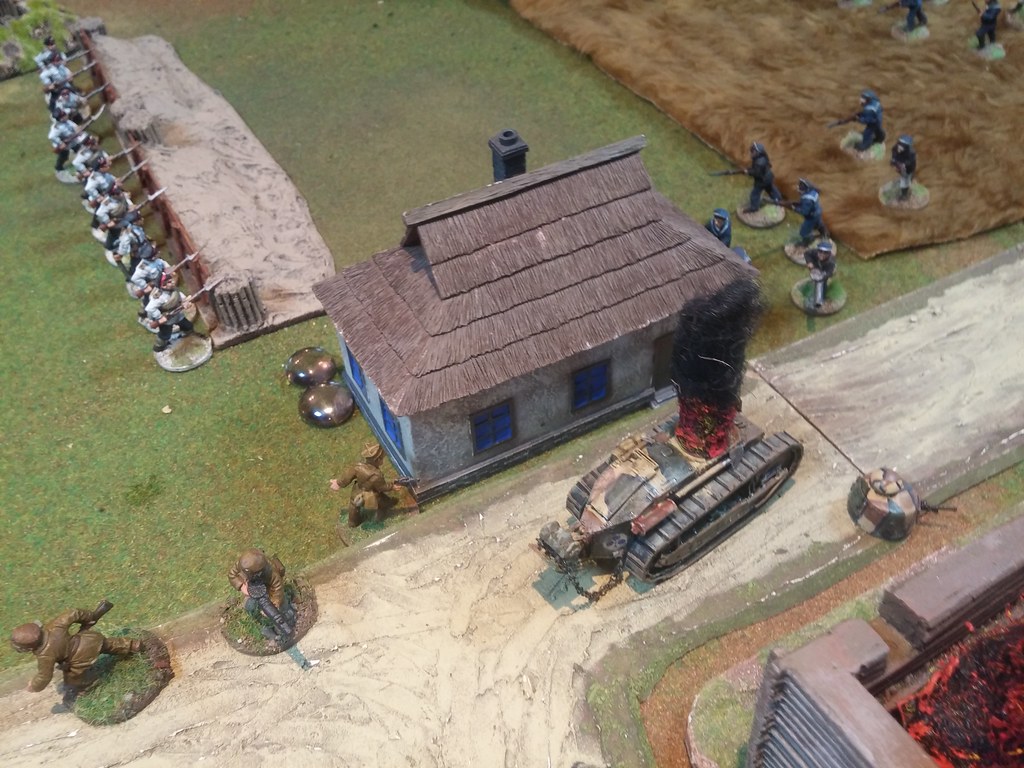
I needed a quick and easy painting project after working on Napoleonic figures for a while, so I decided to work on another Renault FT-17 tank from Warlords for my Poland 1920 project. To spruce up the model, I added a few extras such as a wooden box and tools from Plastic Soldier Company leftovers, a canvas made from a paper kitchen towel soaked in wood glue, and a chain from some unwanted jewellery. I painted the tank in the colours of the 1st Tank Regiment and replicated the skull pattern on the tower. The original pattern should have the word 'Śmierć' on it, which means 'Death,' but I opted not to include it.


Currently, my half-platoon has this many tanks. I plan to paint two more tanks to complete the platoon. It would be great if someone could produce a plastic kit for this tank.


Updated Poland 1920 army list:

https://asienieboje.blogspot.com/p/poland-1918-1921-28mm.html

27 kwietnia 2023

'Bukowski' Armoured Car. Samochód pancerny "Bukowski"

Today new model I made for my Poland 1920 project. It is a 'Bukowski' armoured car. The model came from Scheltrum Miniatures. This is their third and the last Polish armoured car from their offer. The other cars ("Pilsudski Tank' and 'Kresowiak') are quite historically accurate, but this one is by far the least and has some serious mistakes. But before I describe them, a brief history of the car.

Dziś nowy model do mojego projektu Polska 1920. Jest to samochód pancerny "Bukowski". Model pochodzi z oferty Scheltrum Miniatures. Jest to ich trzeci i ostatni polski samochód pancerny, jaki mają w swojej ofercie. Pozostałe samochody ("Tank Piłsudskiego" i "Kresowiak") są dość wierne ich historycznym pierwowzorom, ale ten zawiera kilka dość poważnych błędów. Zanim je jednak opiszę krótka historia samochodu.


The car was built in the summer of 1920 in the Car Repair Workshops of the Lviv General District Command, under the supervision of the chief of the car forces Major Włodzimierz Ossoria-Bukowski (the car was named after this commander). The car was built on the chassis of the Packard 38 model. As the armour, they used armour plates for machine guns from old Austro-Hungarian supplies (there was a large warehouse in Lviv). The car was ready in July 1920 and has been used against Budonnyj Horse Army in the battles of Busk (19.08.1920), Zadviria (20 - 21.08.1920), Pykulovychi and Borshchovychi (23.08.1920), where it was damaged and withdraw to Lviv. After the war, in 1921, it was in the 6th Motor Division. Further fate unknown.

Samochód został zbudowany latem 1920 w w Warsztatach Naprawy Samochodów Dowództwa Okręgu Generalnego Lwów pod nadzorem szefa wojsk samochodowych majora Włodzimierza Ossorii-Bukowskiego (jego imieniem został nazwany samochód). Samochód zbudowano na podwoziu Packarda model 38. Jako opancerzenia użyto osłony pancerne do karabinów maszynowych wykorzystywanych przez armię austro-węgierską (we Lwowie znajdował się ich duży magazyn). Samochód był gotowy do akcji w lipcu 1920 roku i został użyty w walkach przeciw konnej armii Budionnego. w bitwach pod Buskiem (19.08.1920), Zadwórzem (20-21.08.1920), Pikułowice i Barszczowiec (23.08.1920), gdzie został uszkodzony i następnie wycofany do Lwowa. Po wojnie znajdował się w składzie 6. Dywizjonu Samochodowego.  Późniejszy los nieznany. 

Crew/Załoga: 6

Lenght/Długość: 645 cm

Width/Szerokość: 200 cm

High/Wysokość: 272 cm

Weight/Waga: 7 t

Armament/Uzbrojenie: 4 MG


The model has a few mistakes. The first is that the surface of the model is smooth. In fact, armour plates were used to protect it. The surface should therefore consist of a number of small rectangles. To fix this, I carved them into the model. The other thing is the back door. The model has a single door, which I had to remove and I glued a double door made of plastic. The third mistake is the shape of the back of the car. According to the photos, it is straight, in the model it is slightly inclined. I did not remove this element, I decided that there is no point in repairing it. The fourth is the shape of the front wheels. They should be covered (this can also be easily fixed by glueing covers, I will do that later). The final error is what looks like a headlight from the front. This item is missing. I'll probably get it in the future. Despite these errors, the model will be a great addition to my collection.

Model posiada kilka błędów. Pierwszym jest gładka powierzchnia modelu. W rzeczywistości użyto do jego ochrony płyty pancerne. Powierzchnia powinna więc składać się z pewnej ilości małych prostokątów. Aby to naprawić wyryłem je w modelu. Drugą rzeczą są drzwi z tyłu. Model posiada pojedyncze drzwi, te musiałem usunąć i z plastiku dokleiłem drzwi podwójne. Trzeci błąd, to kształt tyłu samochodu. Według zdjęć jest on prosty, w modelu jest lekko nachylony. Tego elementu nie usuwałem, uznałem, ze nie ma sensu tego poprawiać. Czwarty, to kształt przednich kół. Powinny być osłonięte (to można też łatwo naprawić, przez doklejenie osłon, ja to zrobię w terminie późniejszym). Ostatnim błędem jest coś, co wygląda na reflektor z przodu. Brak tego elementu. Ja go pewnie w przyszłości dorobię. Pomimo tych błędów, model będzie znakomitym uzupełnieniem mojej kolekcji. 

05 sierpnia 2022

Крупы і соль 1919.

Another game with Set an East Ablaze, but this time 1919 and somewhere in today's Belarus. It is our last game before the biggest Scottish wargame show (and this year's only one), the Claymore 2022!

Kolejna gra z zasadami Set an East Ablaze, ale tym razem 1919 i gdzieś na terenie obecnej Białorusi. To nasza ostatnia gra przed największym szkockim konwentem (w tym roku dodatkowo jedynym w kraju), Claymore 2022!


SCENARIO / SCENARIUSZ: Bartek Żynda
UMPIRING / PROWADZENIE GRY: Bartek Żynda
SCENERY / SCENERIA: Bartek Żynda, SESWC
FIGURES & MODELS / FIGURKI I MODELE: Bartek Żynda, Michael Schneider, Peter Mearns

1. Forces. Siły.


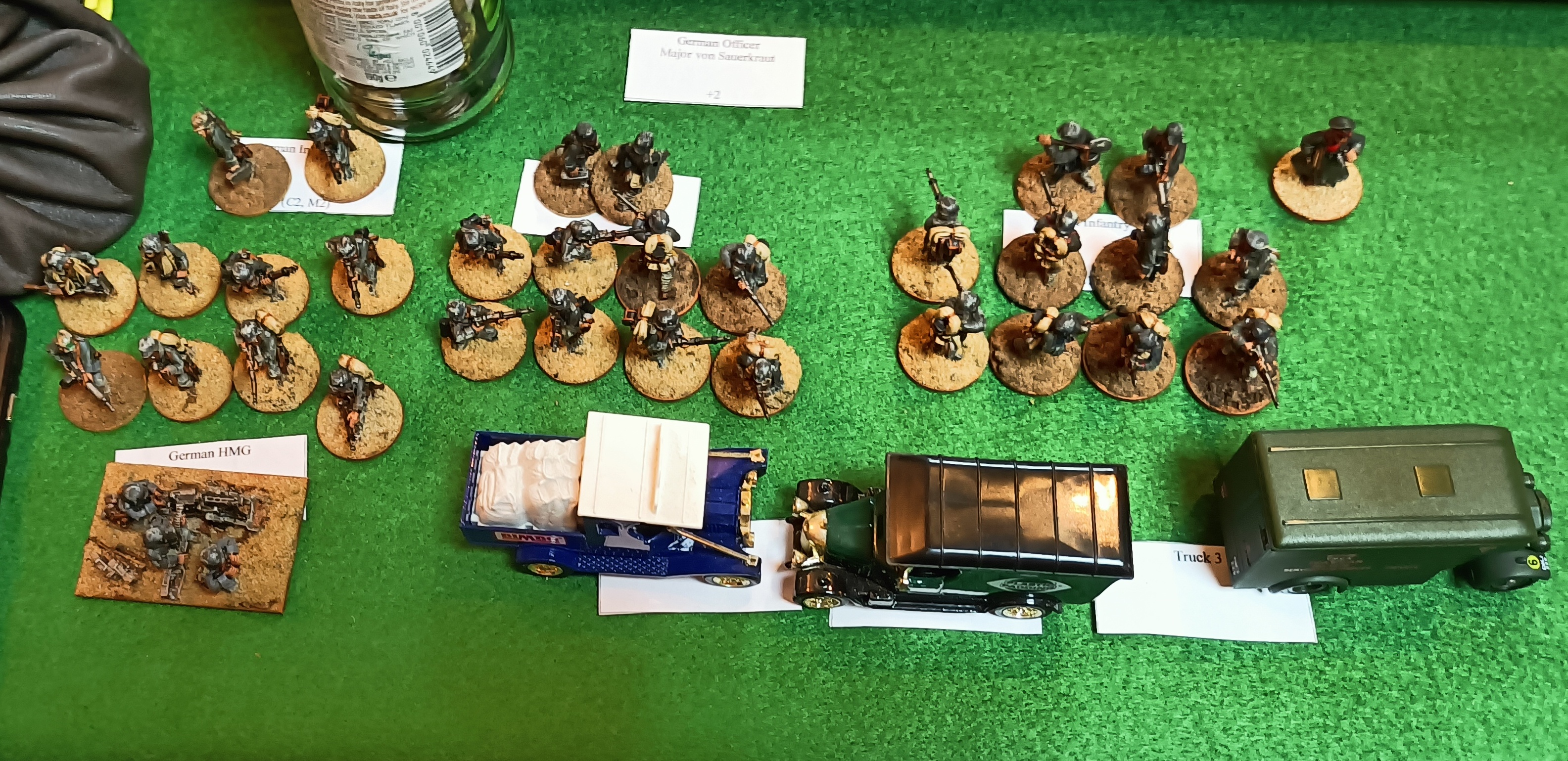
GERMANS /  NIEMCY
(Alasdair)

Your task is to withdraw from the table on one of the North or South edges. Before you can move out of the village, you have to load 3 trucks with groat and salt (you have 4 available).  You can load a truck by activating one of the units and performing the loading action. The activated unit cannot shoot or move that turn. All trucks have a capacity of 12. The loading action is a 2D6 throw. The score shows how many loads have been loaded on the truck. Repeat the loading process until the truck is full. To drive a truck, you can designate one member of the unit, who will be a driver and will be activated on its own cart.
You are aware of the fact, that your high command signed an agreement with Bolsheviks on the transfer of the Ober-Ost sites to them. Also, you are not allowed to shoot first into incoming Polish or Bolshevik troops, you can do it if they start shooting at you.

Victory points:

A truck drove off the table: 20 points
Soldier unit moved out of the table – 10 point
Officer moved out of the table – 5 points.
The building passed to Bolshevic – 2 points.

OdB:

Officer (+2)
3 x Infantry unit (C2, M2) (8 rifles, LMG team (firer and loader)
1 x HMG (C2, M2)


BOLSHEVIKS /  BOLSZEWICY
(Peter, Michael)

Your units are moving west to support the German revolution. In front of you is the village of Bulbakovo occupied by Germans. Your task is to take control of the village. You are aware of the agreement your government made with Germans about taking the Ober-Ost occupied zone. Therefore, it shouldn't be any trouble to take the village from them. However, you just got the information from villagers, that Germans are looting the village from the groat and salt. If you would be able to take it from the Germans it will improve your food supply...

Victory points:

Having the majority of the village – 50 point
Captured and secured German truck – 10 point
Destroyed Polish unit – 5 points
Killed German or Polish officer – 5 points.

OdB:

2 x Officers (+1)
3 x Infantry unit (C3, M3) (9 rifles + LMG)
3 x Infantry unit (C4, M4) (10 rifles)
2 x HMG on Tchanka (all C3, M3)
1 x  Field gun (C3, M3)
1 x  Armoured car (C3, M3)

POLES /  POLACY
(Mike, Angus, Tim)

Poland is finally independent! As the western borders are mostly a matter of talk with the victorious Entente countries, on the east, it is the matter of rifles and bayonets! Our troops moved east to reach the former Polish-Lithuanian Commonwealth borders. Our units approach the village of Bulbavo, which is occupied by Germans. We know that they have to withdraw to Germany, but from the villagers, we know that they are looting the village from the groat and salt. If you would be able to take it from the Germans it will improve your food supply...


Victory points:

Having the majority of the village – 50 point
Captured and secured German truck – 10 point
Destroyed Bolshevik unit – 5 points
Killed German or Bolshevik officer – 5 points.

OdB:

3 Officers (+1)
1 cavalry unit (C2, M2) (10 riders)
3 x Infantry unit (C3, M3) (9 rifles + LMG)
3 x Infantry unit (C4, M4) (10 rifles)
2 x HMG (all C3, M3)
2 x field gun (C3, M3)

2. The Game. Gra.

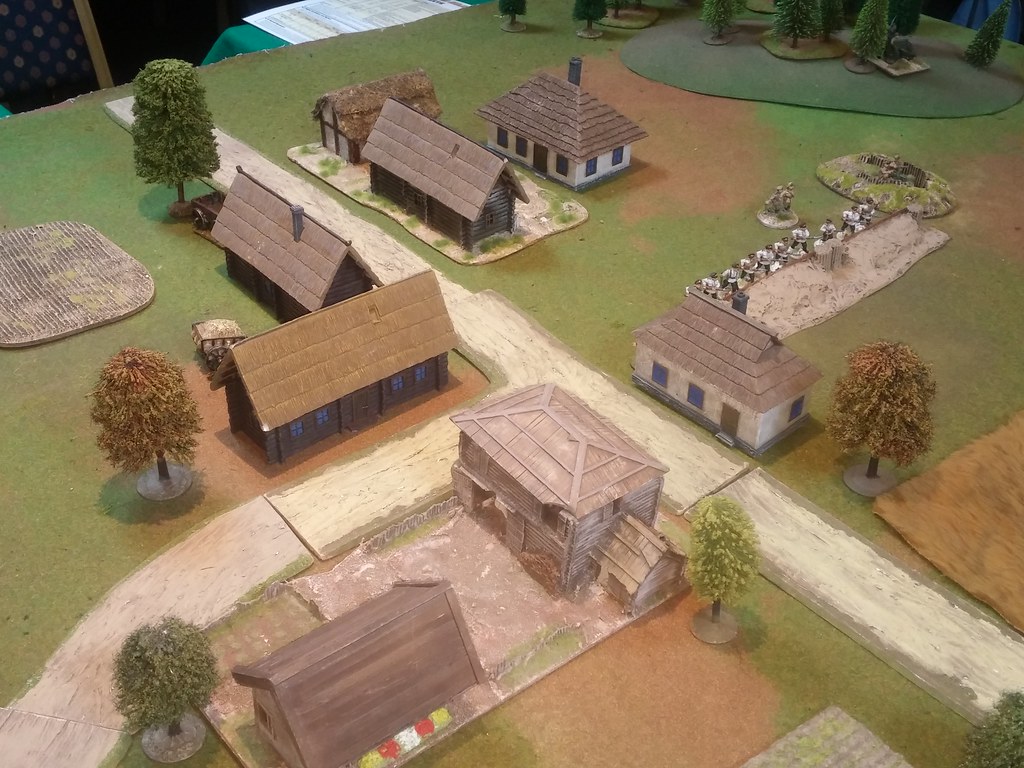
It is early 1919. Somewhere on today's Bialorus is a small village called Bulbakovo. This village is occupied by German troops, who are preparing themselves to withdraw to Germany according to the Compiegne ceasefire.  However, they are not going to go back with empty hands. They are looting the village from groats and salt (after all, everyone wants it, or at least according to some illegally exercising power...). However, from east and west hostile troops come to size the village. These are Poles from the west and Bolsheviks from the east. They also desire groats and salt!

Jest wczesny 1919 rok. Gdzieś na terenach obecnej Białorusi jest mała wioska Bulbakowo. Jest obecnie zajęta przez oddziały niemieckie, które przygotowują się by wycofać się do Niemiec, zgodnie z ustaleniami zawieszenia broni w Compiegne. Nie mają oni zamiaru wracać z pustymi rękoma. Rabują wieś z całej kaszy i soli (wszyscy przecież tego pożądają, a przynajmniej według niektórych nielegalnie sprawujących władzę...). Jednak ze wschodu i z zachodu zbliżają się wrogie oddziały. To Polacy z zachodu i Bolszewicy ze wschodu. Oni także mają chrapkę na kaszę i sól!


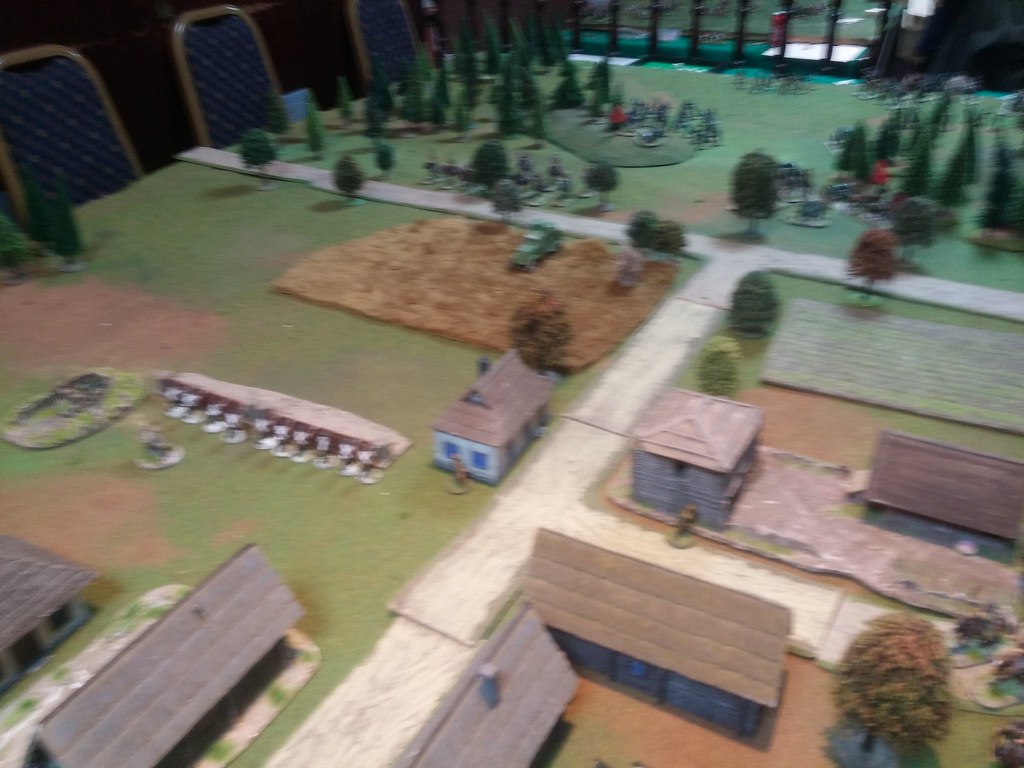
Alasdair very quickly loaded all trucks, but then he decided to defend a village, it was a big mistake. In the meantime, Poles and Bolsheviks moved toward the village and started shooting at Germans. Finally, both sides took half of the village respectively with Germans in the middle of it. Then everyone started shooting at everyone, Poles on Bolsheviks and Germans, Bolsheviks on Germans and Poles and Germans on Poles and Bolsheviks. During this firing, Michael managed to kill a German officer. Finally, Alasdair moved his trucks out of the village, but that was it. Two drivers get killed (both from Polish rifles) and one truck got broken down on the road. It was not over Alasdair's problems. At the end of every turn, all sides rolled 2D6. On double 6, they would get something extra, on double 1 all units would have to have an obligatory morale test. Guess what Alisdair rolled? That was game over for him, as all of his units surrendered...

Alasdair bardzo szybko załadował ciężarówki, ale z jakichś dziwnych powodów, zdecydował się bronić wioski, co było dużym błędem. W międzyczasie Polacy i Bolszewicy ruszyli w kierunku wioski i rozpoczęli strzelać do Niemców. Ostatecznie, obie strony zajęły po połowie wioski z Niemcami pośrodku. Wtedy wszyscy zaczęłi do siebie strzelać, Polacy do Bolszewików i Niemców, Bolszewicy do Polaków i Niemców i Niemcy do Polaków i Bolszewików. Podczas tego ostrzału Michaelowi udało się zabić niemieckiego oficera. W końcu Alasdair wyprowadził swoje ciężarówki z wioski, ale to było wszystko. Dwóch kierowców zostało zabitych (oboje od polskiego ognia) i jedna z nich się popsuła na drodze. To nie był jednak koniec problemów Alasdaira. Pod koniec każdej tury, każda ze stron rzucała 2K6. Na dublet 6, mogli dostać coś ekstra, na dublet 1 wszystkie oddziały miały obowiązkowy test morale. Zgadnijcie co wyrzucił Alasdair? To był dla niego koniec gry, wszystkie jego oddziały poddały się...


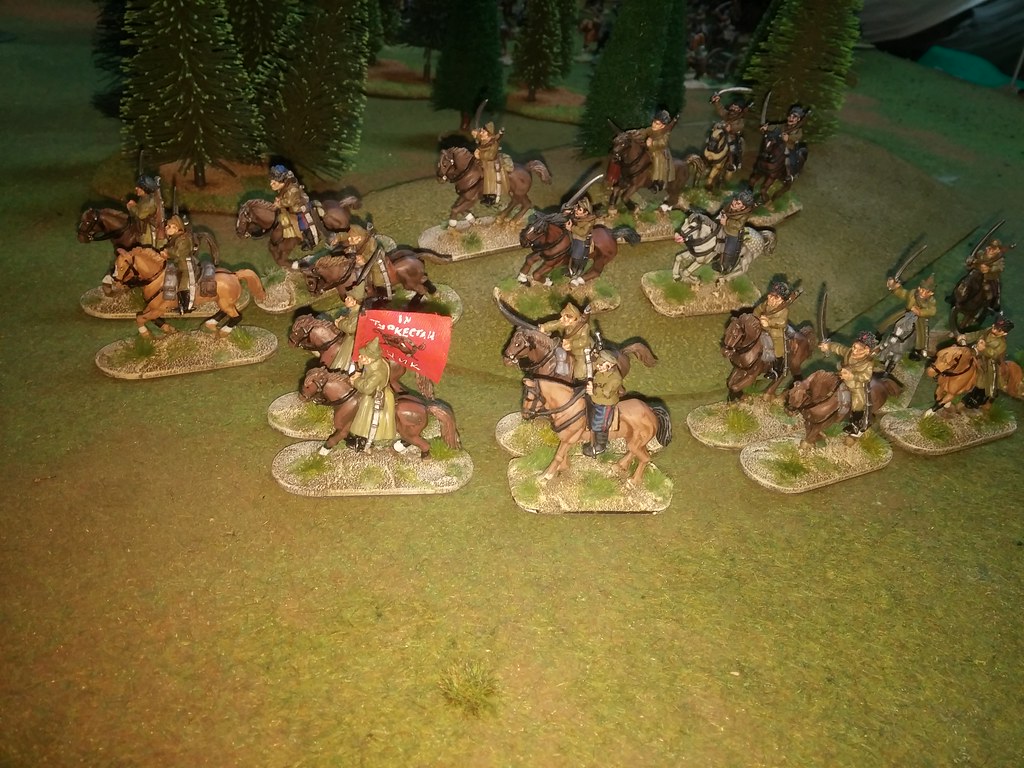
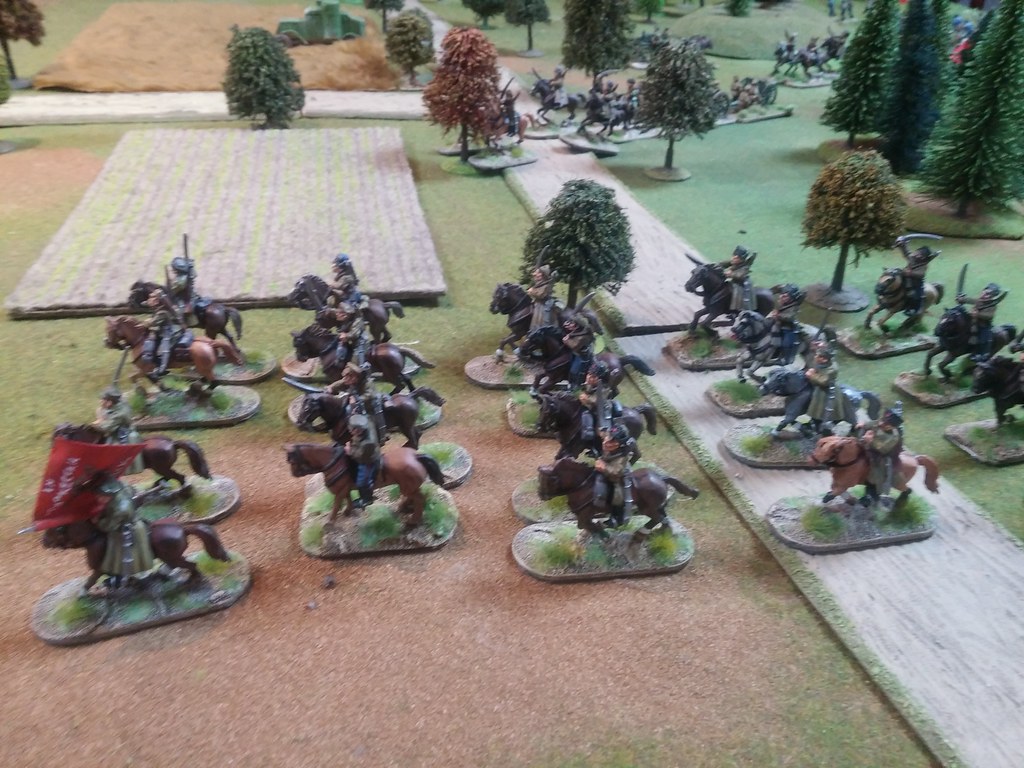
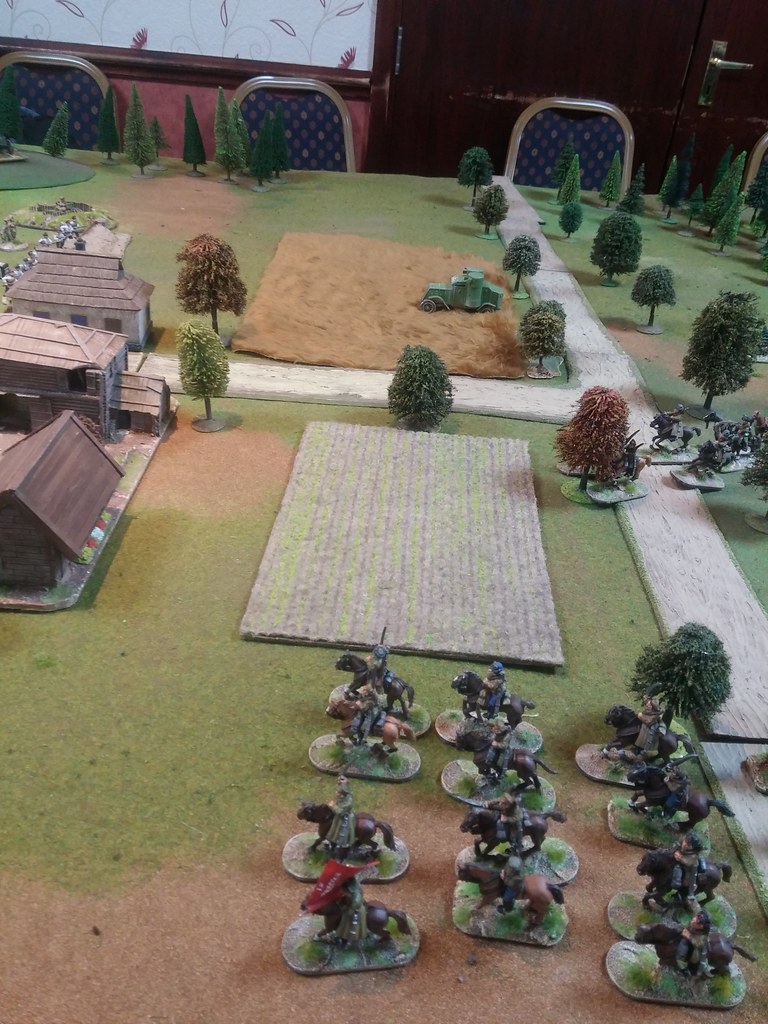
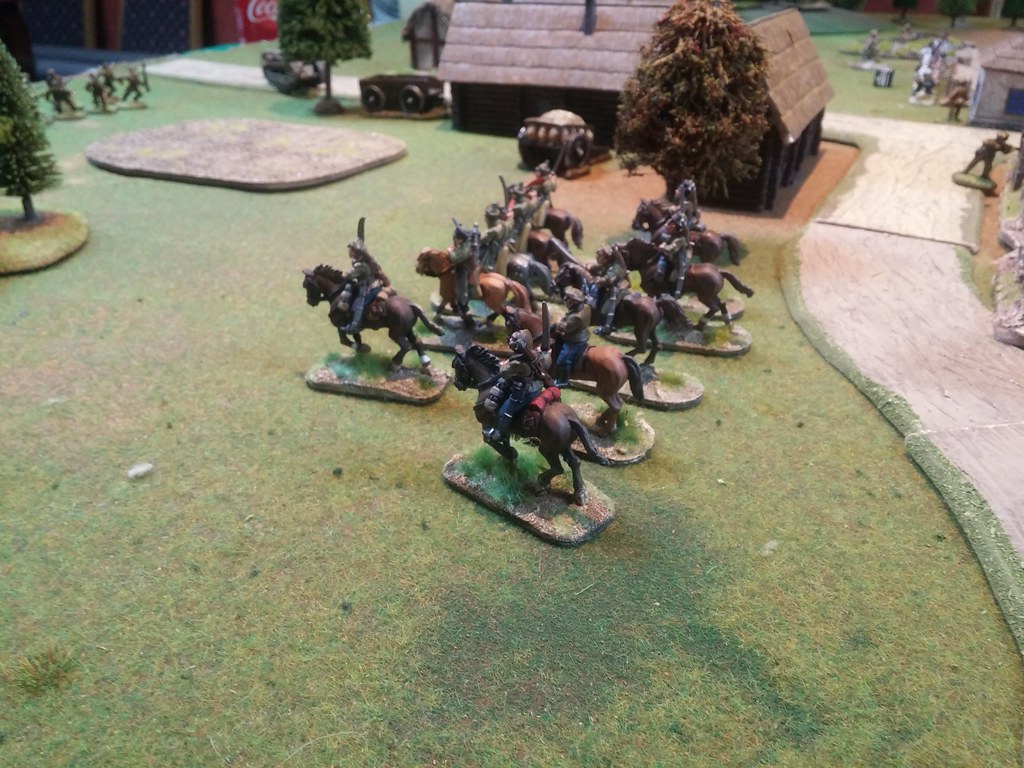
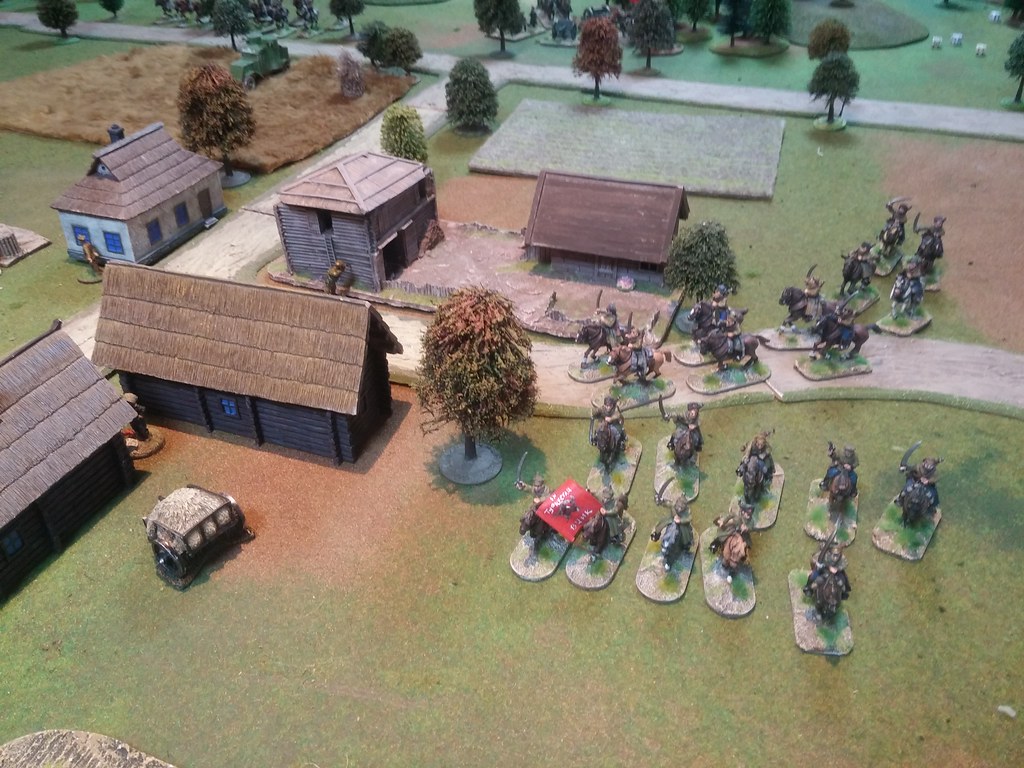
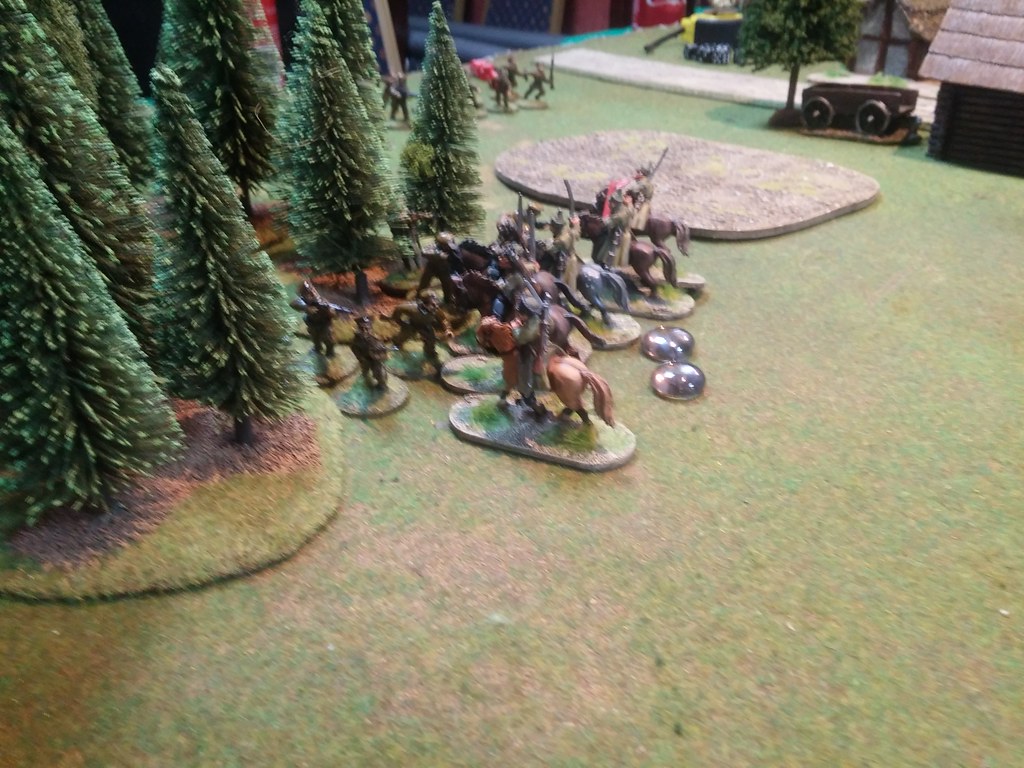
It was since then the matter between Poles and Bolsheviks. Both sides took positions in the buildings on two sides of the village. The firing gets even more intensive. Poles were much better in that and managed to destroy one unit. During the last turn Polish cavalry charged the Bolshevik infantry unit in an open field. Oops... Yes, that infantry unit evaporated. That finished the game. Poles get 10 points, Bolsheviks 5 points and Germans none! Well done Angus, Mike and Tim!

Od teraz wszystko miało się rozstrzygnąć pomiędzy Polakami i Bolszewikami. Obie strony zajęły pozycje po obu stronach wioski. Ostrzał stał się dużo bardziej intensywny. Polacy strzelali jednak lepiej i udało im się zniszczyć jeden oddział bolszewicki. Podczas ostatniej tury, polska kawaleria zaszarżowała na oddział piechoty bolszewickiej, który stał w otwartym polu. Ups... Tak, ten oddział piechoty został zmieciony. To zakończyło grę. Polacy zdobyli 10 punktów, Bolszewicy 5 a Niemcy 0. Gratulacje dla Angusa, Mike'a i Tima! 


Michael:

to be updated soon...

SESWC:

to be updated soon...

Flickr:

https://www.flickr.com/photos/asienieboje/albums/72177720301081666


27 lutego 2020

Artillery for my Poles. Artyleria dla moich Polaków.

Here some new models for my Poles for 1920 war. I was always lack of artillery and finally, I solved that problem. I used 3 sets from Foundry: French artillery crew, a French field gun and a German field gun. Now my troops are completely for incoming AB1 game.
Oto nowe modele dla moich Polaków na rok 1920. Zawsze brakowało mi artylerii i w końcu rozwiązałem ten problem. Użyłem do tego 3 zestawów od Foundry: francuską obsługę dział, działo francuskie i działo niemieckie. Teraz moje oddziały są gotowe na nadchodząca grę grupy AB1.


07 października 2019

Uhlans 1920. Ułani 1920.

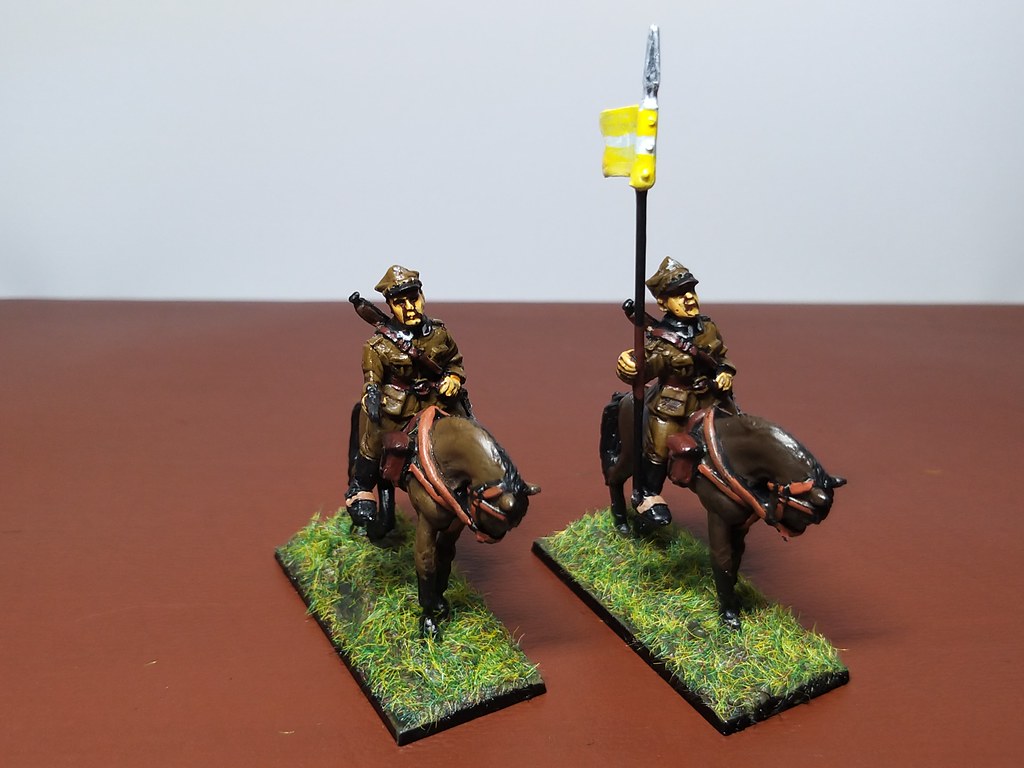
That was a quick task. I managed to paint them in just two days. Here are my new uhlans. Figures are a composition of Scheltrum Miniatures (horses, corps, head in 'maciejowka' chapka), Siberia Miniatures (heads in 'rogatywka' chapka) and Front Rank (lances). In that way, I made the tenth rider for my previous 3rd Wielkopolska Uhlan Regiment (in our games the cavalry unit consist of 10 riders and I had till this moment only 9 of them...). The next two are made for my new regiment: the 214th Uhlan Regiment of Volunteers Army. That unit was the predecessor of the famous 24th Lancers, my favourite unit of 2WW. I had a big problem with the colour of the pennant. I cannot find the right colours on my pictures. As the unit used the resources of the 14th Uhlans Regiment, I gave them their colours. If you know more about that subject, let me know in the comment section.
To bya szybka robota. Udało mi się pomalować ich w zaledwie dwa dni. Oto moi nowi ułani. Figurki są kompozycją następujących producentów: Scheltrum Miniatures (konie, torsy, główka w maciejówce), Siberia Miniatures (główki w rogatywkach) i Front Rank (lance). W ten sposób zrobiłem dziesiątego jeźdźca do mojego poprzedniego oddziału 3. Pułku Ułanów Wielkopolskich (w naszych grach oddział kawalerii składa się z 10 jeźdźców, a je do tej pory miałem tylko 9...). Kolejnych dwóch zaczyna mój nowy oddział, 214 pułk ułanów Armii Ochotniczej. Oddział ten był poprzednikiem sławnego 24. pułku ułanów, mojej ulubionej jednostki 2WŚ. Największy problem sprawiły mi barwy proporca do lancy. Na moich zdjęciach trudno rozeznać się, jakie to były kolory. Ponieważ oddział był tworzony w oparciu o 14. pułk ułanów, dałem im ich barwy. Jeśli sprawa jest Wam bardziej znana podzielicie się tym w komentarzach.

3rd. Wielkopolska Uhlan Regiment:


214 Uhlan Regiment of Volunteers Army:


All new uhlans:

10 października 2018

Budyonny near Lvov, 1920. Budionny pod Lwowem, 1920.

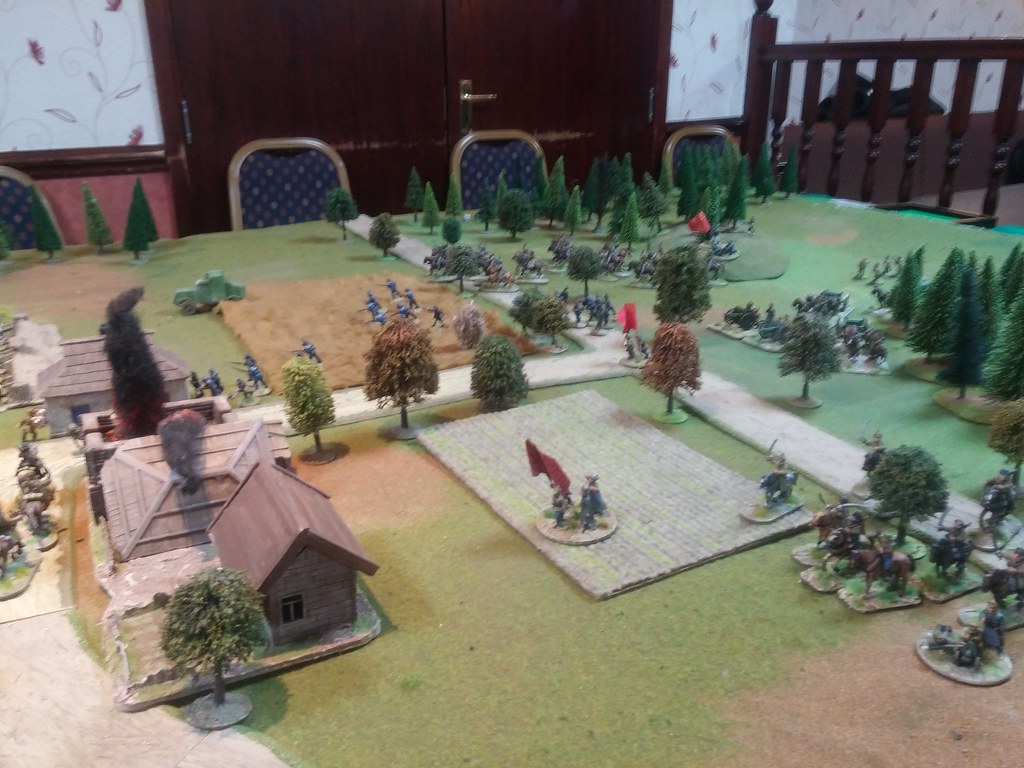
Last week  we had a Polish Bolshevik War game with Set An East Ablaze rules. My scenario was loosely based on the situation on the southern front, in the first half of August 1920, where Budyonny 1st Cavalry Army was moving forward on Lwów. On their way was fictitious village defended by join Ukrainian and Polish troops. Their task was to stop Bolshevik against any movement through their defending lines.
W zeszłym tygodniu mieliśmy gre z czasów wojny polsko bolszewickiej z zasadami Set An East Ablaze. Mój scenariusz luźno bazował na sytuacji on południowym froncie, w pierwszej połowie sierpnia 1920, gdzie Konarmia Budionnego posuwała się do przodu na Lwów. Na jej drodze znalazła się fikcyjna wioska, broniona przez połączone oddziały ukraińskie i polskie. Zadaniem było powstrzymianie Bolszewików, by nie przekroczyli ich linii obrony.


SCENARIO/SCENARIUSZ: Bartek Żynda
UMPIRING/PROWADZENIE GRY: Bartek Żynda
SCENERY/SCENERIA: SESWC
FIGURES & MODELS/FIGURKI I MODELE: Bartek Żynda, Angus Konstam

1. Forces. Siły.


POLAND & UKRAINE/POLSKA i UKRAINA
(Alisdair, Alexander)

Initial Ukrainian Forces

Officer
1 x Infantry (10 rifles)
1 x HMG
1 x Field gun.

(Rifles and HMG must be deployed in trenches, gun within 1/3 table length)

Initial Polish Forces

Officer
D3 x Infantry (9 rifles, 1 LMG)

(All units must be deployed anywhere on the table  within 1/3 table length)

Polish Reinforcements:

On the beginning of every turn roll D6, on 5 or 6, 1 unit available, then roll again if 6 is rolled then Tank, Cavalry or Plane is available if not then Polish player receive unit of Infantry)


BOLSHEVIK RUSSIA/ROSJA BOLSZEWICKA
(Angus)

Initial Forces:

Officer
2 x D6 units (any Infantry (10 figures), cavalry (10 figures), Armoured Car, Field Gun, HMG, Tachanka) - all starting game 12' from their table edge.

Reinforcements:

Every turn Roll D3, the roll will defined the number of fresh units available (any Infantry (10 figures), cavalry (10 figures), Armoured Car, Field Gun, HMG or Tachanka)


All units are M3, only trenches gives the hard cover. Buildings and forest give soft cover.

2. The game. Gra.


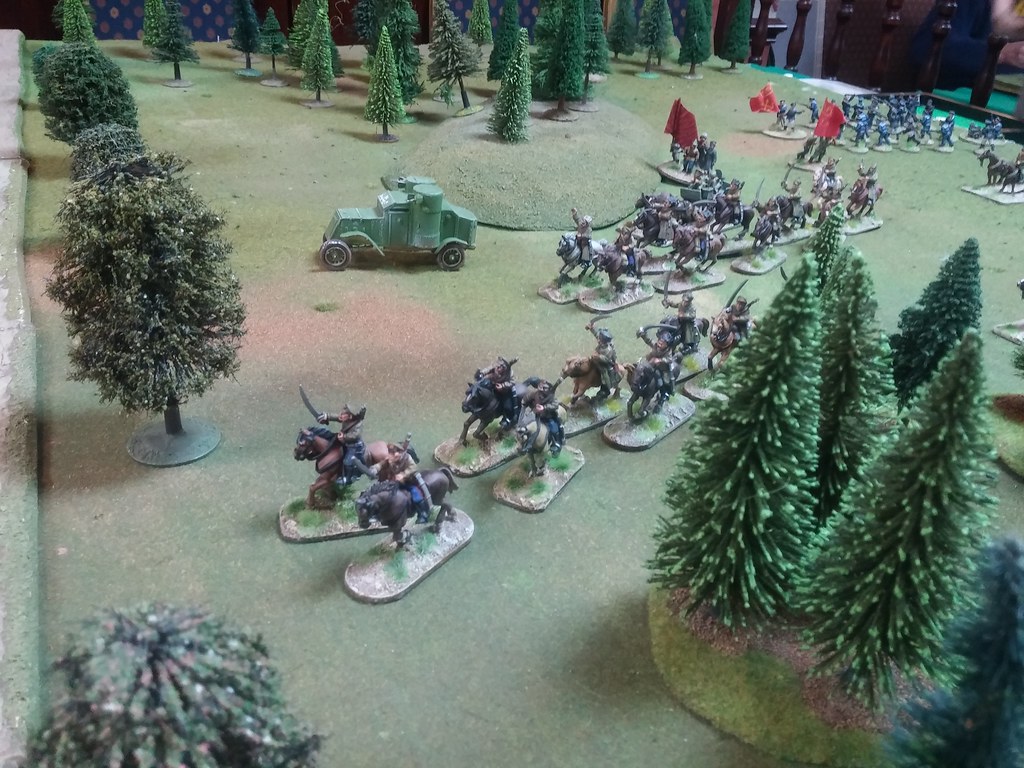
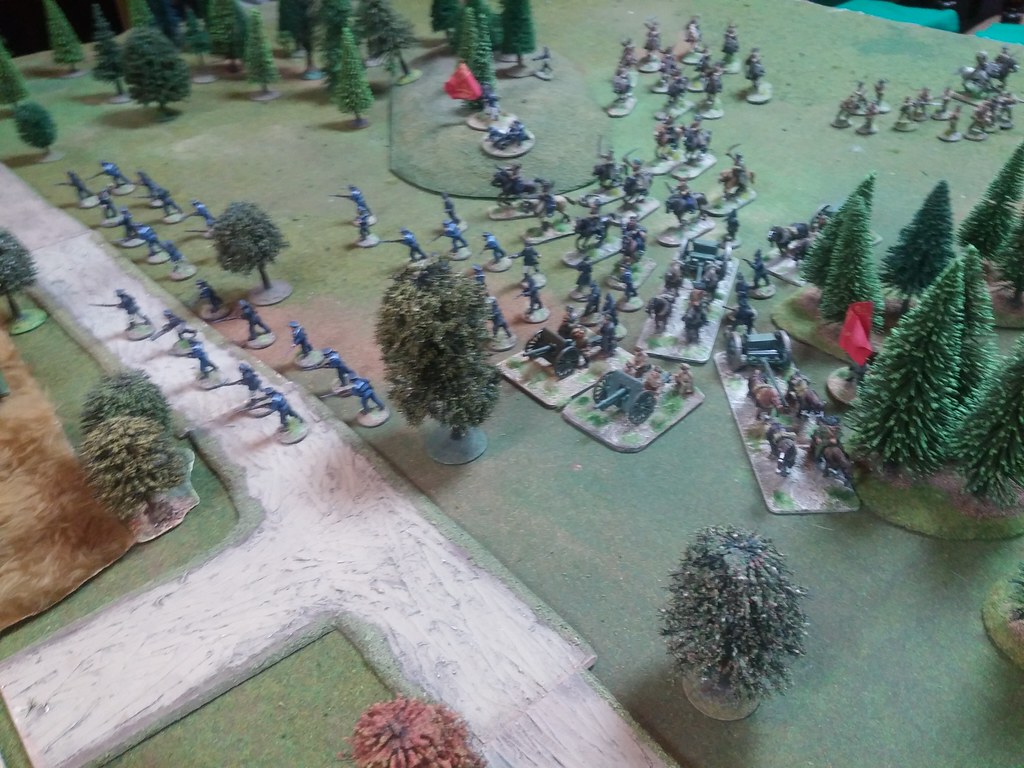
Both sides started very well with their initial roll, Poles get 3 units and Bolsheviks 11 (2 x Infantry, 4 x Cavalry, 1 x HMG, 2 x Field Gun, 1 x Tachanka, 1 x Armoured Car). To win the game Reds had to move any units through Polish-Ukrainian table edge. Angus moved his cavalry fast forward and soon it get to the village. Here the problems started. Poles and Ukrainians stood very hard and push back the Bolsheviks. Soon the table was full of Red forces, but as soon they get to village it were annihilated. Soon started arriving Polish reinforcements, they get 2 infantry units and a tank. That helped a lot, because during the fight Poles started losing their units too. Mainly because of very precise artillery barrage. Finally the game has to finish with Ukrainians and Poles still kept the village. Budyonny get stopped, the same way as in 1920!
Obie strony zaczęły bardzo dobrze początkowymi rzutami kośćmi. Polacy otrzymali 3 oddziały a Bolszewicy 11 (2 x piechota, 4 x kawaleria, 1 x ckm, 2 x działo, 1 x taczanka, 1 x samochód pancerny). By wygrać grę Czerwoni musieli przynajmniej jednym oddziałem przekroczyć polsko ukraińską krawędź stołu. Angus szybko wysforował do przodu swoją kawalerię, która po krótkim czasie osiągnęła wioskę. Tu zaczęły się problemy. Polacy i Ukraińcy trzymali się bardzo mocno i odrzucili Bolszewików. Wkrótce stół był pełny czerwonoarmistów, ale jak tylko zbliżyli się zbytnio do wioski, zostawali oni zniszczeni. Wkrótce też nadciągnęły polskie posiłki, dwa oddziały piechoty i czołg. To stanowiło dużą pomoc, ponieważ  również Polacy zaczęli tracić swoje oddziały, głownie dzięki dość celnemu ogniowi bolszewickiej artylerii. Ostatecznie gra musiała się skończyć a wioska była wciąż w rękach Ukraińców i Polaków. Budionny został zatrzymany, tak samo jak w 1920!


3. Links. Linki.


Angus:

SESCW:

Flickr: